Thursday, October 31, 2019

For the first time in two years, the smartphone market shows signs of life

All is not lost for smartphone manufacturers. On the heels of two years’ of global stagnation, the category is finally showing some signs of life. Much of the bounce back comes as manufacturers are working to correct for dulled consumer interest.

I wouldn’t put too much weight in the numbers right now, as they’re little more than an uptick. Numbers from Canalys put shipment growth at 1% from Q3 2018 to Q3 2019. In most cases, that would be a modest gain, at best, but this is notably the first time in two years that the numbers have been heading in the right direction.

Samsung saw the biggest gains — a phenomenon the analyst firm chalks up to a shift in strategy to eat some of its profits. The move has paid off for the quarter, with an 11% growth in device shipments, to 78.9 million devices shipped. That gives the company the largest global market share, at 22.4%.

Huawei, too, saw impressive growth, year-over-year, commanding second place with 66.8 million units shipped. Much of its growth came from China, which has ramped up spending on the company’s products as it has run into regulatory scrutiny overseas. Resumption of sales in some international markets helped juice growth as well. Of the top three, Apple continued to struggle the most, with a 7% loss from 2018.

For now, at least, none of the these numbers qualify as full turnaround for a stagnant category, though the upcoming roll out of 5G coverage could help move numbers in the right direction in the coming year.


from blogger-2 https://ift.tt/2N1XYPv
via IFTTT

Wednesday, October 30, 2019

Samsung ramps up its B2B partner and developer efforts

Chances are you mostly think of Samsung as a consumer-focused electronics company, but it actually has a very sizable B2B business as well, which serves over 50,000 large enterprises and hundreds of thousands of SMB entrepreneurs via its partners. At its developer conference this week, it’s putting the spotlight squarely on this side of its business — with a related hardware launch as well. The focus of today’s news, however, is on Knox, Samsung’s mobile security platform and Project AppStack, which will likely get a different name soon, and which provides B2B customers with a new mechanism to deliver SaaS tools and native apps to their employees’ devices, as well as new tools for developers that make these services more discoverable.

At least in the U.S., Samsung hasn’t really marketed its B2B business all that much. With this event, the company is clearly thinking to change that.

At its core, Samsung is, of course, a hardware company, and as Taher Behbehani, the head of its U.S. mobile B2B division, told me, Samsung’s tablet sales actually doubled in the last year and most of these were for industrial deployments and business-specific solutions. To better serve this market, the company today announced that it is bringing the rugged Tab Active Pro to the U.S. market. Previously, it was only available in Europe.

The Active Pro, with its 10.1″ display, supports Samsung’s S Pen, as well as Dex for using it on the desktop. It’s got all of the dust and water resistance you would expect from a rugged device, is rated to easily support drops from about four feet high, and promises up to 15 hours of battery life. It also features LTE connectivity and has an NFC reader on the back to allow you to badge into a secure application or take contactless payments (which are quite popular in most of the world but are only very slowly becoming a thing in the U.S.), as well a programmable button to allow business users and frontline workers to open up any application they select (like a barcode scanner).

“The traditional rugged devices out there are relatively expensive, relatively heavy to carry around for a full shift,” Samsung’s Chris Briglin told me. “Samsung is growing that market by serving users that traditionally haven’t been able to afford rugged devices or have had to share them between up to four co-workers.”

Today’s event is less about hardware than software and partnerships, though. At the core of the announcements is the new Knox Partner Program, a new way for partners to create and sell applications on Samsung devices. “We work with about 100,000 developers,” said Behbehani. “Some of these are developers are inside companies. Some are outside independent developers and ISVs. And what we hear from these developer communities is when they have a solution or an app, how do I get that to a customer? How do I distribute it more effectively?”

This new partner program is Samsung’s solution for that. It’s a three-tier partner program that’s an evolution of the existing Samsung Enterprise Alliance program. At the most basic level, partners get access to support and marketing assets. At all tiers, partners can also get Knox validation for their applications to highlight that they properly implement all of the Knox APIs.

The free Bronze tier includes access to Knox SDKs and APIs, as well as licensing keys. At the Silver level, partners will get support in their region, while Gold-level members get access to the Samsung Solutions Catalog, as well as the ability to be included in the internal catalog used by Samsung sales teams globally. “This is to enable Samsung teams to find the right solutions to meet customer needs, and promote these solutions to its customers,” the company writes in today’s announcement. Gold-level partners also get access to test devices.

The other new service that will enable developers to reach more enterprises and SMBs is Project Appstack.

“When a new customer buys a Samsung device, no matter if it’s an SMB or an enterprise, depending on the information they provide to us, they get to search for and they get to select a number of different applications specifically designed to help them in their own vertical and for the size of the business,” explained Behbehani. “And once the phone is activated, these apps are downloaded through the ISV or the SaaS player through the back-end delivery mechanism which we are developing.”

For large enterprises, Samsung also runs an algorithm that looks at the size of the business and the vertical it is in to recommend specific applications, too.

Samsung will run a series of hackathons over the course of the next few months to figure out exactly how developers and its customers want to use this service. “It’s a module. It’s a technology backend. It has different components to it,” said Behbehani. “We have a number of tools already in place we have to finetune others and we also, to be honest, want to make sure that we come up with a POC in the marketplace that accurately reflects the requirements and the creativity of what the demand is in the marketplace.”


from blogger-2 https://ift.tt/2q0GF8B
via IFTTT

Tuesday, October 29, 2019

Samsung teases a clamshell foldable form factor

Last year at its developer conference, Samsung showed off an early glimpse of its upcoming foldable. In hindsight, the Galaxy Fold’s rollout could have gone more smoothly, but sometimes first-gen products go that way, I suppose. At the very least, it’s clear that the company won’t let a rocky start stand between it and broader foldable phone ambitions.

Onstage at this year’s event, the company showed off another take on the foldable display. A video shows the Galaxy Fold form factor morphing into a clamshell more akin to traditional dumb phones.

Unlike last year’s event, this one shouldn’t be taken as a pre-product announcement. Rather, the company says it’s “explor[ing] a range of new form factors in the foldable category.” It’s something that’s been pretty clear from the outset: these earliest days of foldables are very much about seeing which form factors click. Samsung is currently working with developers to explore these concepts.

This latest is more in line with leaks we’ve seen of the rumored Motorola Razr reboot, with an elongated screen that can easily be folded up and stashed away in a pocket. Perhaps we’ll get more insight into the company’s plans as CES or MWC.

Perhaps.


from blogger-2 https://ift.tt/331SLwQ
via IFTTT

Samsung’s new laptops charge phones with their touchpad

Some features are the result of consumer demand. Others simply make sense. And then there are features like the Galaxy Book Flex and Ion’s Wireless PowerShare that appear to be more a product of a “because we can” approach to product design.

Wireless charging is, in and of itself, kind of a no-brainer in an era when many or most flagship smartphones support the technology. Samsung’s implementation, however, leaves a lot to be desired here. It’s true, of course, that Wireless PowerShare’s implementation is less than ideal, requiring one of two phones to be face-down, but I can certainly see applications for the tech.

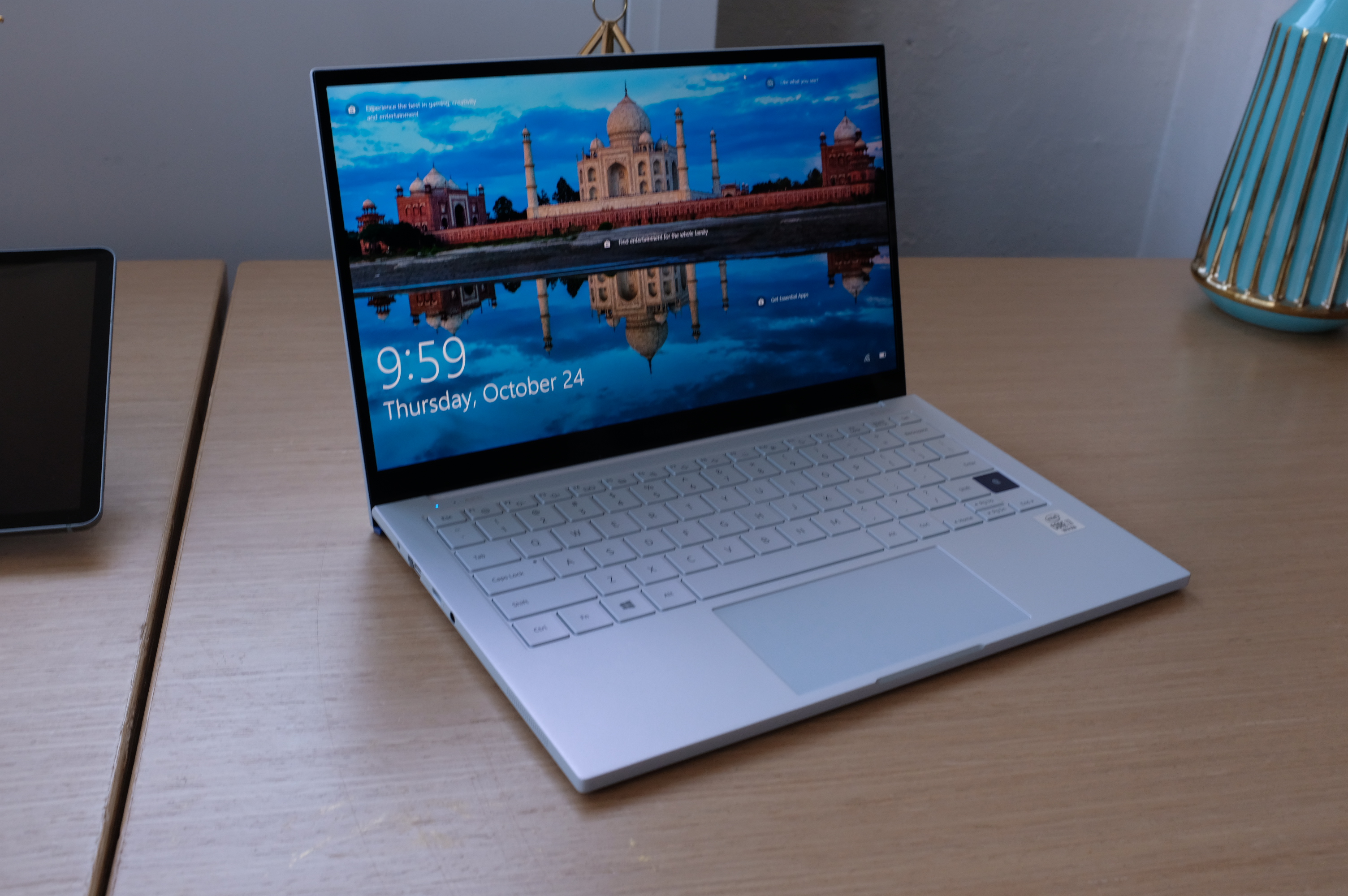
DSCF8374

On the new laptops, however, charging the phone requires that it occupy all of the trackpad. In the case of the Flex, I suppose you can still use the touchscreen (there isn’t one on the Ion), but even so, there’s no scenario in which having a phone sitting on the trackpad doesn’t seriously dampen one’s ability to get some serious work done.

Between the issues and the fact that you can charge your phone the old-fashioned way with the laptops, it’s hard to find a scenario in which the feature is anything but a gimmick. Samsung says the trackpad offered the easiest implementation of the tech — versus, I suppose the palm rest or the top of the device. I’m not sure there’s a great implementation for a feature that might have better been left on the drawing board.

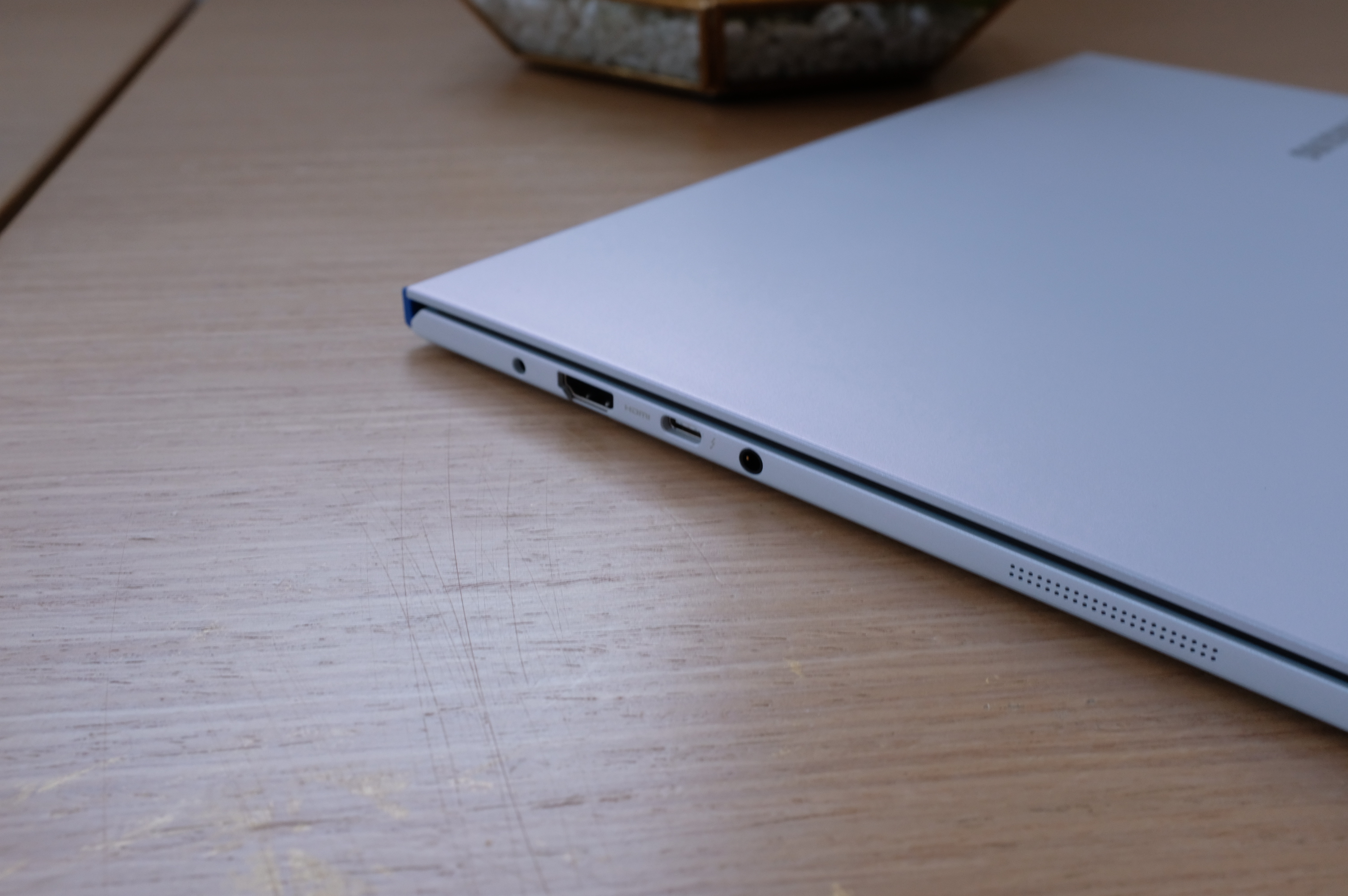
DSCF8369

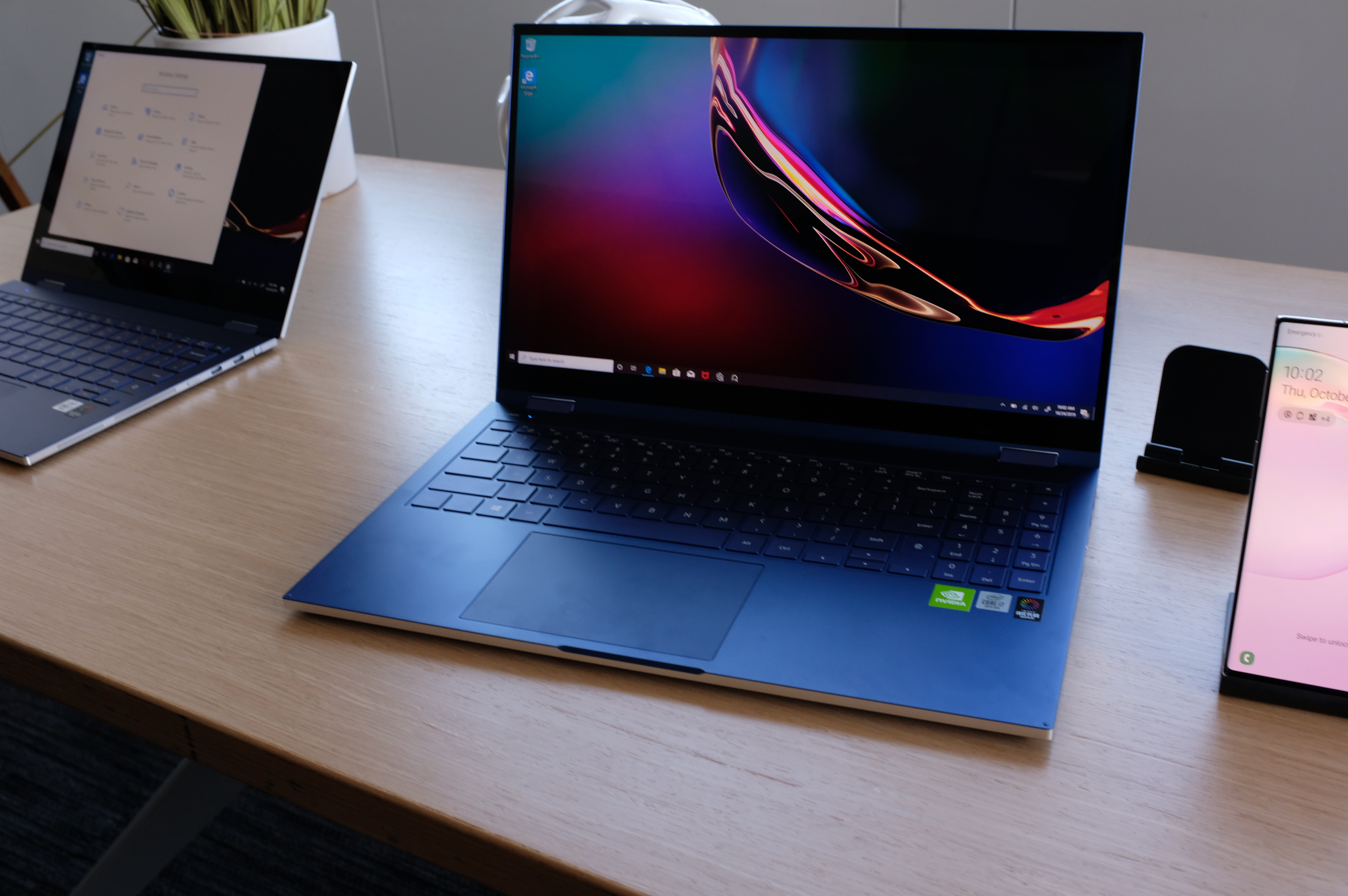
It’s a silly feature on what are otherwise very solid additions to Samsung’s laptop line. The Flex is the more premium of the two, featuring a touchscreen and the 360-degree hinge that gives the device its name. The laptop has an aluminum body with a “royal blue” finish and a built-in slot for the included S Pen. It comes in both 13 and 15-inch varieties, with a 10th-gen Intel processor, 16GB of RAM and up to a TB of storage.

Also available in 13 and 15-inch versions, the Ion ditches the touchscreen and 360 hinge, but maintains an ultra-thin, lightweight design.

DSCF8390

Samsung’s jumping the gun a little early on the announcement here. Both models will be available in the U.S. early next year, priced similarly to their predecessors. Asked why the company didn’t just wait for CES for the announcement, it noted models arrive at different times in different markets.

Based on past systems, it seems like a pretty safe bet that they’ll be hitting Korean shores earlier. Perhaps in time for the holidays.


from blogger-2 https://ift.tt/2JuILEy
via IFTTT

Thursday, October 17, 2019

Samsung confirms glaring S10 fingerprint reader flaw, promises fix

Galaxy S10 users should turn on some alternative security features as Samsung works to address a major flaw with the device’s in-screen fingerprint sensor. The consumer electronics giant noted the issue today after a British user reported the ability to unlock her device with unregistered fingerprints.

The flaw was discovered after placing a $3.50 screen protector on the device, confirming earlier reports that adding one could introduce an air gap that interfered with the ultrasonic scanner. The company noted the issue in a statement, telling the press that it was, “aware of the case of S10’s malfunctioning fingerprint recognition and will soon issue a software patch.”

Third party companies including Korean bank KaKaoBank have suggested users turn off the reader until the issue is addressed. That certainly appears to be the most logical course of action until the next software update.

When it hit the market back in March, the company touted the technology as one of the industry’s most secure biometric features, noting that it was, “engineered to be more secure than a traditional 2D optical scanner, the industry-first Ultrasonic Fingerprint ID, with sensors embedded in the display, reads the 3D contours of your physical fingerprint to keep your phone and data safe. This advanced biometric security technology earned the Galaxy S10 the world’s first FIDO Alliance Biometric Component certification.”

Samsung has warned against the use of screen protectors previously, but the ability to fool the product with a cheap off the shelf mobile accessory clearly presents a major and unexpected security concern for Galaxy users. We’ve reached out to Samsung for further comment.

Update: Samsung provided TechCrunch the following comment,“We are investigating this issue and will be deploying a software patch soon. We encourage any customers with questions or who need support downloading the latest software to contact us directly at 1-800-SAMSUNG.”


from blogger-2 https://ift.tt/2OV5jSA
via IFTTT

Monday, October 14, 2019

Samsung opens Android 10 One UI beta ahead of final launch

After pushing back a planned early-October launch, Samsung has introduced the Android 10 beta of its One UI. The 2.0 version of the Android skin follows a little under a year after the first version’s beta (released in November 2018). The concept goes counter to the earliest Android overlays, instead intending to create a simpler take on Google’s operating system.

Manufacturers’ long standing instance on putting their own stamp on Android is understandable — if sometimes misguided. Samsung’s initial stated intention for One UI is to let software and hardware, “work together in perfect harmony,” to paraphrase Stevie Wonder.

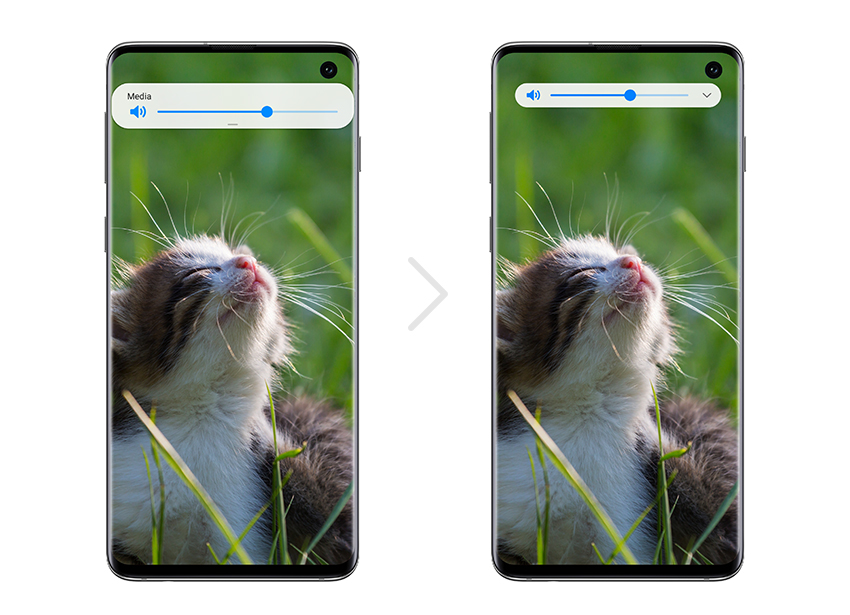
Samsung One UI Beta Program Cat S10 full screen

One UI is largely a success on these fronts. And Samsung is understandably cautious about the roll out, opting again for a public beta version, ahead its Android 10 release. “Select” Galaxy S10 owners in the U.S. can sign up for the program starting today, with a final release “in the coming months.” There are a lot of Galaxy phones out there, so the company clearly wants to get the experience right, gathering up user feedback in the process. 

Here’s what’s new, per Samsung,

  • A new, smarter layout with animated icons and improved edge lighting
  • An enhanced Dark Mode that reduces display brightness while viewing content and provides battery saving benefits
  • Minimized pop-ups, embedded loading indicators and the ability to only view buttons the user needs
  • A streamlined design where notifications take up less space, allowing users to stay up to date while focusing on the task at hand
  • Focus Mode to pause apps temporarily for times when you need to minimize distractions

More info on Samsung’s blog.


from blogger-2 https://ift.tt/2q5BQuD
via IFTTT

Sunday, October 13, 2019

Samsung’s Galaxy Fold concierge service is live in the US for those who need it

Part of Samsung’s reboot of the Galaxy Fold was the announcement of a Premiere Service. Along with a reinforced version of the phone and a lot more warning labels, the company announced that it would also be a 24/7 care service…just in case something happened with the device.

I had some issues with my in just over a day, after not running into any trouble with the original version of the phone. Given how gingerly the company insists users act with the device, my issue doesn’t appear to be particularly widespread — good news for Samsung on that front. Even so, this sort of things feels pretty necessary for a $2,000 (and up) phone that is effectively in mass beta testing.

close fold

Two weeks after making the device available in the States, Premier Service has gone live. Sammobile noted the addition of Fold Concierge via a new software update, bringing with it support via phone or video chat. The list of potentially helpful features ranges from on-boarding with the device to a $149, same-day screen replacement service. That can be accommodated in person at a number of locations.

It’s a pretty unique offer from a big consumer electronics company — though the Fold is nothing if not unique, I suppose. I’ve got a fuller write up of my impressions of the handset here. The TLDR version is the I can’t recommend the purchase of what is very much a first generation device that’s double the price of a standard flagship. If you’re so inclined, however, Samsung’s got a hotline for you.


from blogger-2 https://ift.tt/2IKT07e
via IFTTT