Thursday, August 8, 2019

Africa’s top mobile phone seller Transsion to list in Chinese IPO

Chinese mobile-phone and device maker Transsion will list in an IPO on Shanghai’s STAR Market, Transsion confirmed to TechCrunch.

The company—which has a robust Africa sales network—could raise up to 3 billion yuan (or $426 million).

“The company’s listing-related work is running smoothly. The registration application and issuance process is still underway, with the specific timetable yet to be confirmed by the CSRC and Shanghai Stock Exchange,” a spokesperson for Transsion’s Office of the Secretary to the Chairman told TechCrunch via email.

Transsion’s IPO prospectus was downloadable (in Chinese) and its STAR Market listing application available on the Shanghai Stock Exchange’s website.

STAR is the Shanghai Stock Exchange’s new Nasdaq-style board for tech stocks that also went live in July with some 25 companies going public. 

Headquartered in Shenzhen—where African e-commerce unicorn Jumia also has a logistics supply-chain facility—Transsion is a top-seller of smartphones in Africa under its Tecno brand.

The company has a manufacturing facility in Ethiopia and recently expanded its presence in India.

Transsion plans to spend the bulk of its STAR Market raise (1.6 billion yuan or $227 million) on building more phone assembly hubs and around 430 million yuan ($62 million) on research and development,  including a mobile phone R&D center in Shanghai—a company spokesperson said. 

Transsion recently announced a larger commitment to capturing market share in India, including building an industrial park in the country for manufacture of phones to Africa.

The IPO comes after Transsion announced its intent to go public and filed its first docs with the Shanghai Stock Exchange in April. 

Listing on the STAR Market will put Transsion on the freshly minted exchange seen as an extension of Beijing’s ambition to become a hub for high-potential tech startups to raise public capital. Chinese regulators lowered profitability requirements, for the exchange, which means pre-profit ventures can list.

Transsion’s IPO process comes when the company is actually in the black. The firm generated 22.6 billion yuan ($3.29 billion) in revenue in 2018, up from 20 billion yuan from a year earlier. Net profit for the year slid to 654 million yuan, down from 677 million yuan in 2017, according to the firm’s prospectus.

Transsion sold 124 million phones globally in 2018, per company data. In Africa, Transsion holds 54% of the feature phone market—through its brands Tecno, Infinix, and Itel—and in smartphone sales is second to Samsung and before Huawei, according to International Data Corporation stats.
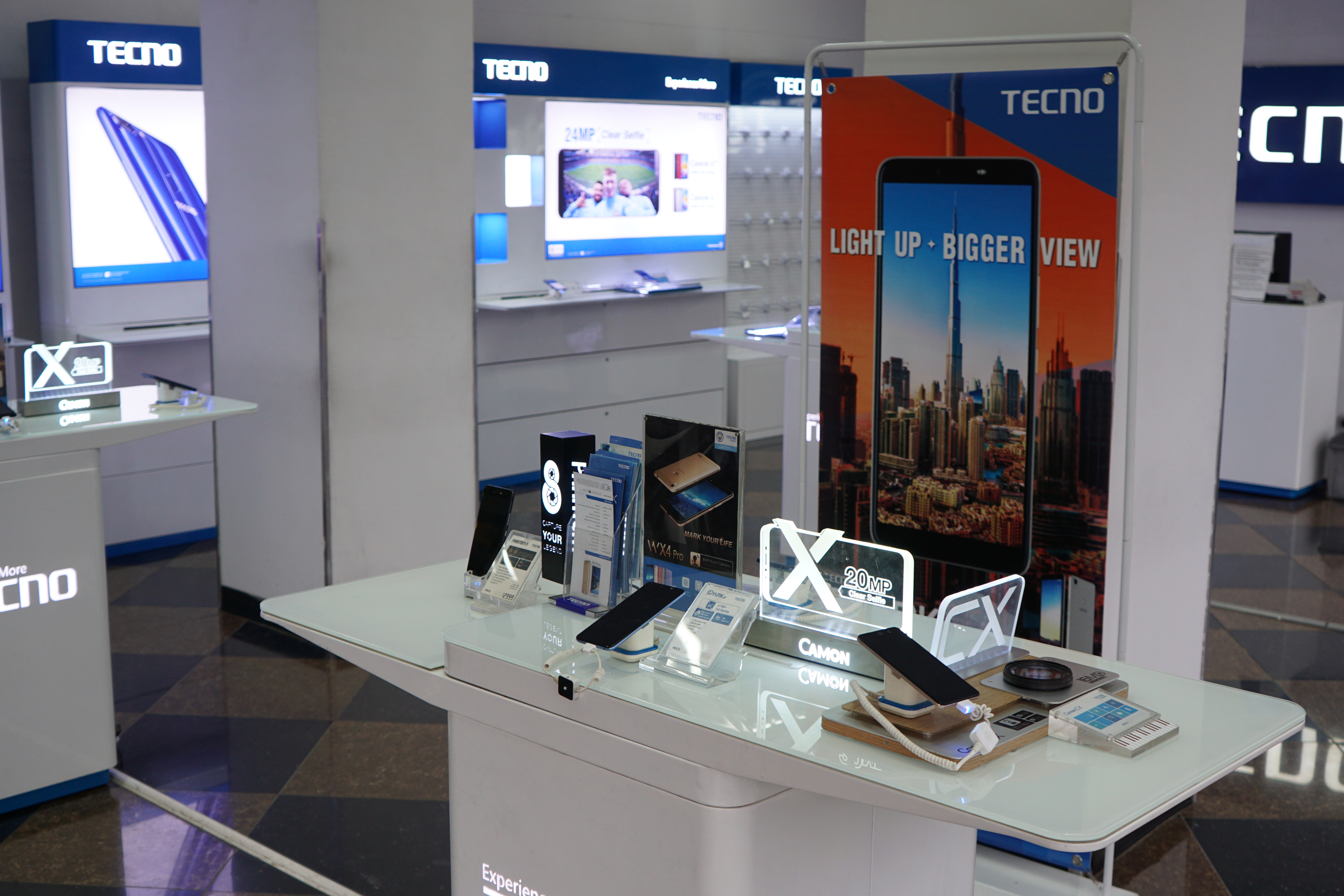
Transsion has R&D centers in Nigeria and Kenya and its sales network in Africa includes retail shops in Nigeria, Kenya, Tanzania, Ethiopia and Egypt. The company also attracted attention for being one of the first known device makers to optimize its camera phones for African complexions.

On a recent research trip to Addis Ababa, TechCrunch learned the top entry-level Tecno smartphone was the W3, which lists for 3600 Ethiopian Birr, or roughly $125.

In Africa, Transsion’s ability to build market share and find a sweet spot with consumers on price and features gives it prominence in the continent’s booming tech scene.

Africa already has strong mobile-phone penetration, but continues to undergo a conversion from basic USSD phones, to feature phones, to smartphones.

Smartphone adoption on the continent is low, at 34 percent, but expected to grow to 67 percent by 2025, according to GSMA.

This, added to an improving internet profile, is key to Africa’s tech scene. In top markets for VC and startup origination—such as Nigeria, Kenya, and South Africa—thousands of ventures are building business models around mobile-based products and digital applications.

If Transsion’s IPO enables higher smartphone conversion on the continent that could enable more startups and startup opportunities—from fintech to VOD apps.

Another interesting facet to Transsion’s IPO is its potential to create greater influence from China in African tech, in particular if the Shenzhen company moves strongly toward venture investing.

Comparatively, China’s engagement with African startups has been light compared to China’s deal-making on infrastructure and commodities—further boosted in recent years as Beijing pushes its Belt and Road plan.

Transsion’s IPO move is the second recent event—after Chinese owned Opera’s big venture spending in Nigeria—to reflect greater Chinese influence and investment in the continent’s digital scene.

So in coming years, China could be less known for building roads, bridges, and buildings in Africa and more for selling smartphones and providing VC for African startups.


from blogger-2 https://ift.tt/2TeFVXQ
via IFTTT

Wednesday, August 7, 2019

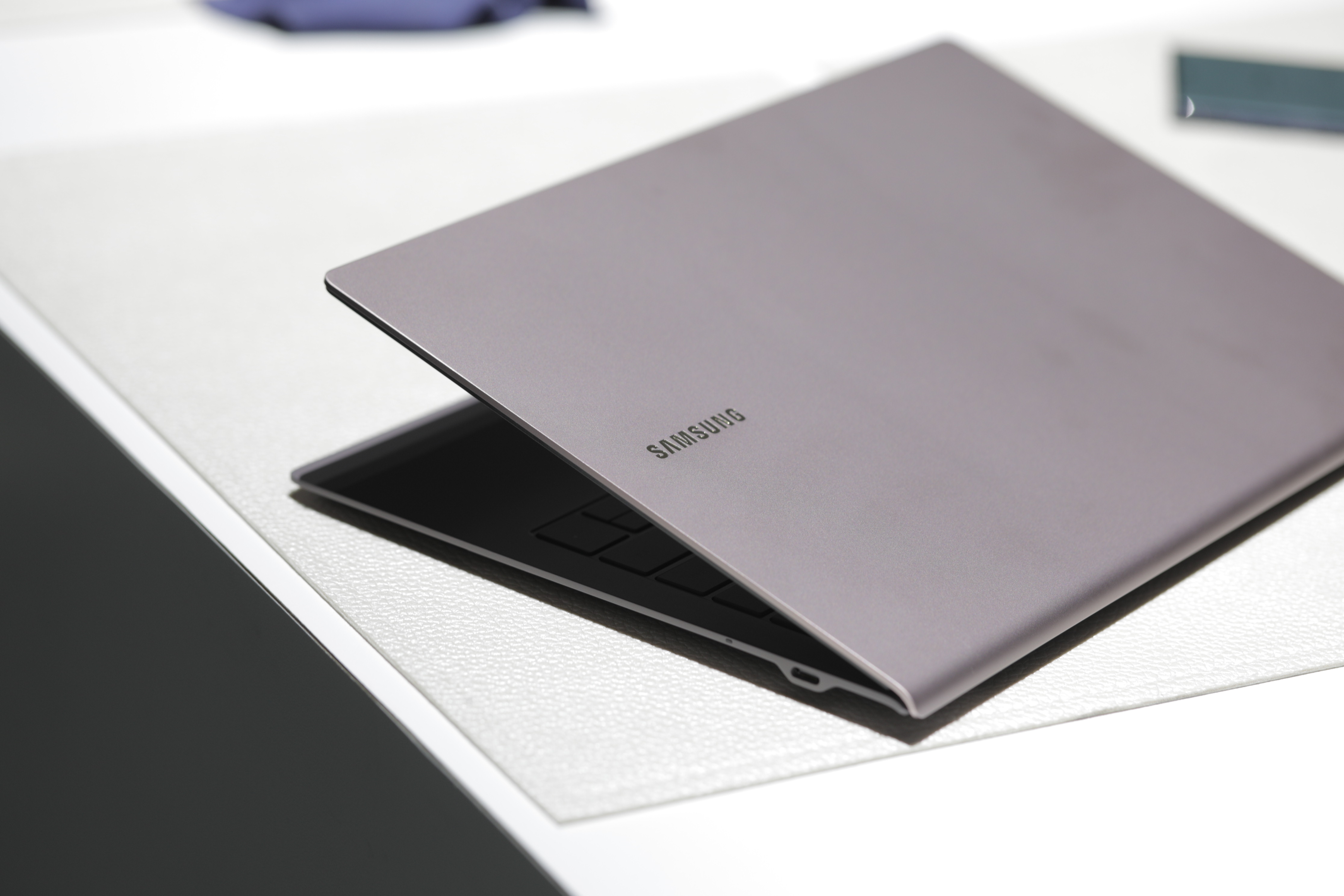
The Galaxy Book S is Samsung’s Windows-powered answer to the MacBook Air

We were hoping for at least one surprise during today’s big event. At the end of Unpacked, Samsung debuted the Galaxy Book S, a thin and light system created in tandem with Microsoft and Qualcomm.

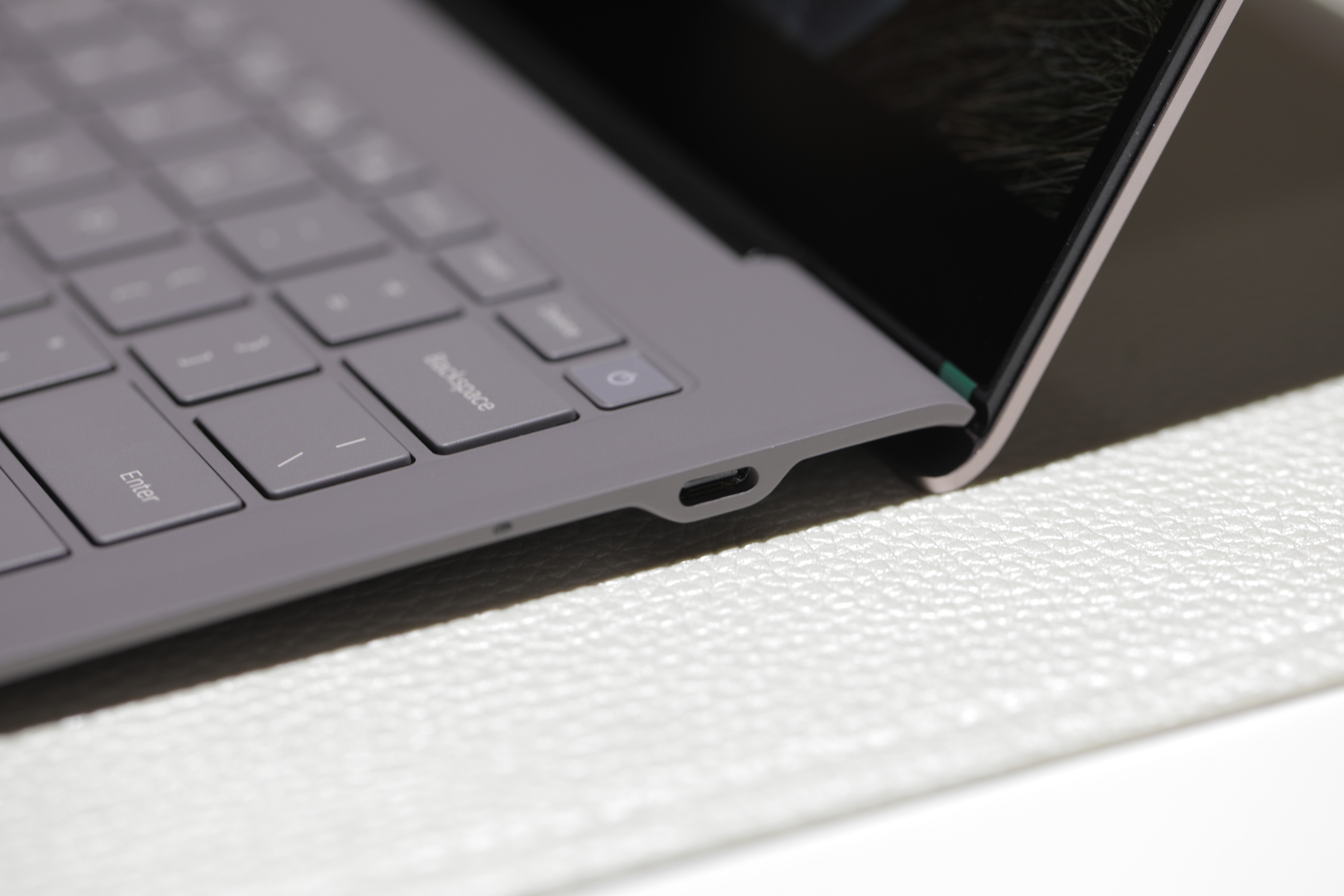
The laptop runs Windows 10 on a Qualcomm mobile chip. Among other things, the chip gives the device some crazy long battery life — 23 hours on a charge, according to the company’s office number. The Book S features a single USB-C port on either side, and the small chip means you can fill it up it using the same charger as the Note 10. It’s clear now why the company was so proactive about adding more Windows compatibility for the Note 10.

CMB 7738

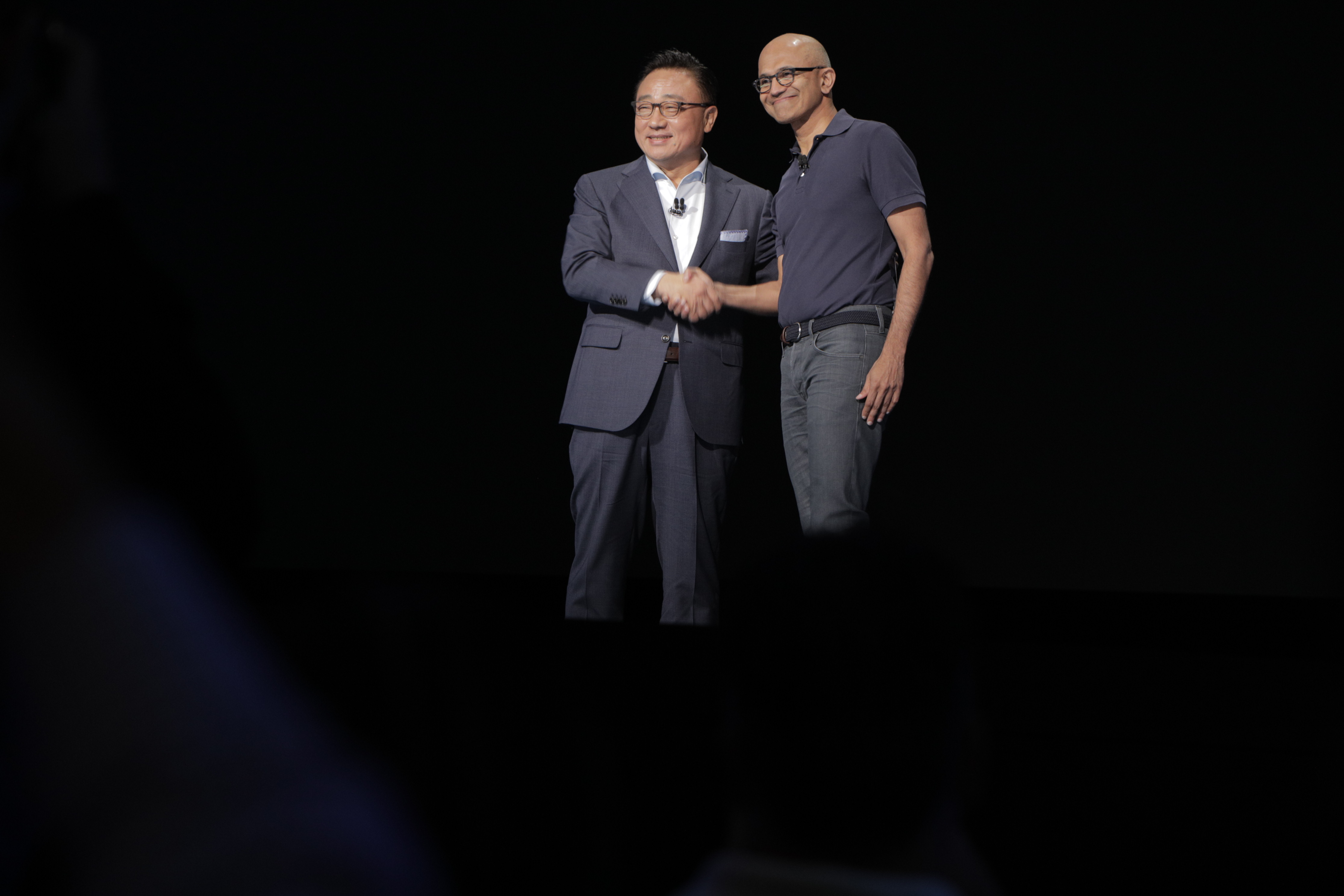
The company even invited Microsoft CEO Satya Nadella on stage to discuss the growing partnerships between the two companies, which clearly has Apple firmly in its sights.

CMB 7728

The laptop is coming in September, starting at $999. More information on specs and the like coming between now and than, though I wouldn’t expect too much from this device in terms of computing power. If anything, it’s probably something more akin to a premium Chromebook — a market Microsoft has been attempting to take on from a variety of angles.

CMB 7645

Samsung has, too, of course. And perhaps this will prove a fruitful partnership for both parties.


from blogger-2 https://ift.tt/2YPVZVh
via IFTTT

The Note’s most impressive new feature is only available on the 10+

The new Note’s 3D scanning feature got what may well have been the loudest applause line of today’s big Samsung event. It’s an impressive feature for sure, but it’s the kind with little real-world value at the moment — and it’s only available on the pricier Note 10+. Understandable on the latter, at least.

After all, Samsung needs some ways to distinguish the more expensive unit. Aside from size and pricing, the 10+ also features a time of flight sensor missing on the standard Note. That brings an extra level of depth sensing. For now, uses for the feature are pretty limited. Take AR Doodle — that’s available on both versions of the device.

CMB 7347

3D scanning is an impressive differentiator, and the demo rightfully got some cheers as a Samsung employee walked a circle around a stuffed beaver toy named “Billy” (I dunno, man). The phone did a solid job capturing the image in 3D and pulled it out of its background. From there, a user can sync its movements to their own and animate it, AR/Animoji-style.

[gallery ids="1865885,1865884,1865883,1865881,1865871,1865870,1865869"]

Again, a neat demo, but pretty limited real-world use for most of us. Though that’s pretty standard for these sorts of features. It’s as much about showing that the company is thinking about AR and offering the hardware to do it. Making it truly useful, however, will be in the hands of developers.


from blogger-2 https://ift.tt/2M3AquF
via IFTTT

Samsung’s Galaxy Note gets even larger (and smaller)

The first Note was a spectacle. It wasn’t just the reintroduction of the stylus. In 2011, the idea of a 5.3-inch phone was laughable. Around the same time, Steve Jobs famously mocked a push toward 4-inch-plus phones, telling a press conference, “no one’s going to buy that.”

With the average phone size hovering about 5.5 inches these days, Samsung clearly won that round. Of course, the push has been helped considerably by an ever-improving screen-to-body ratio. Jobs’ concerns about not being able to get one’s hand around a device no longer apply to a majority of these handsets.

Today in Brooklyn, Samsung is pushing things even further, with the introduction of a new subset of Galaxy Note devices. The Note 10+ is a 6.8-inch device. Among other things, the introduction of a new model differentiates the line slightly from Samsung’s other flagship line. The earlier arrival of an S Plus model meant that the S Pen was essentially the only distinguishing factor here.

Having spent some time with both Note 10 models, I can say I’m impressed with what the company has managed to do from a design perspective. The 10+ impressively has roughly the same footprint as the 6.4-inch Note 9, making carrying around such a massive device that much less absurd.

What’s really interesting here, however, is that the company took the rare action of actually shrinking down the standard Note from 6.4 to 6.3 inches. Weird, right? Yeah, well, these are weird times, friend.

The thinking behind the smaller screen was apparently to make the device more accessible to first-time buyers. That seems a bit silly when talking about a literal fraction of an inch, but the improved screen-to-body ratio makes it that much smaller.

Here are the main distinctions between the two models:

  • Note 10: Display 6.3-inch FHD+ AMOLED, 2280×1080 (401ppi); Note 10+: 6.8-inch Quad HD+ AMOLED 040×1440 (498ppi)
  • Note 10: 3,500mAh battery; Note 10+: 4,300mAh battery
  • Note 10: 8GB RAM, 256GB storage; Note 10+: 12GB RAM, 256GB storage (with 512GB option)
  • The Note 10+ also has an additional TOF sensor on the rear-camera array for depth sensing and an optional 5G model
  • Note 10: Starts at $949 ; Note 10+: Starts at $1,100


from blogger-2 https://ift.tt/2KvPJZM
via IFTTT

The headphone jack dies not with a bang, but a Note

Next month marks three years since Apple unceremoniously murdered the headphone jack. Courage. The company was roundly mocked for its own hype, and the intervening product cycles have been marked by several companies proudly showcasing their staunch refusal to cave.

None were more vocal about clinging to the 3.5mm jack than Samsung. And the company certainly deserves kudos for turning the once ubiquitous port into a distinguishing feature. Like I said a couple of weeks ago, if nothing else, Samsung ought to get a bit of credit for the continuing high quality of the headphones it bundles in with its flagships. It’s been an Apple blindspot, while Samsung has continued with comfortable, quality, AKG-branded headphones.

Never forget where you were at 4PM ET on August 7, 2019. That’s when the torch carrier finally extinguished the flame at the tail end of the dongle decade. The Note 10 is here and the headphone jack is gone.

You already know the whys. Apple discussed them three years ago. So did Google after quickly reversing its own foot dragging on the Pixel line. But Samsung has had well over three years to prepare for this inevitable moment. The company knew there would be a little egg on its face after a few years of talking up the port. But when you’ve been through a Galaxy Fold relaunch and two Note recalls, this is a veritable cakewalk.

Samsung’s primary driver here is the same as everyone else: space. The Note 10 and Note 10+ are big phones with big batteries (3,500mAh and 4,300mAh, respectively). For reasons that are clear for anyone who’s been following the line for some time, the company hit pause on the battery race for a while there, focusing instead on safety issues.

With that particular crisis well in the past now, however, battery life is once again central — as it should be. In order to make more room for mAhs, the company dropped the port and picked up the dongle. The tipping point, it says, came when its internal metrics showed that a majority of users on its flagship devices (the S and Note lines) moved to Bluetooth streaming. The company says the number is now in excess of 70% of users.

I’ll be honest, that surprises me a bit, even now that Bluetooth headphones are far cheaper and more plentiful than just three years ago. And no doubt the number changes fairly dramatically when you start talking about entry-level and mid-tier devices. The company wouldn’t come out and say it, but it seems this dramatic shift also marks the end of the jack for S series devices when the S11 starts shipping next year.

As for the dongle… turns out it won’t ship in-box. That’ll cost you extra. But the good news is that the Note will ship with a USB-C version of its excellent (by free in-box standards) AKG headphones. Also, Samsung is one of eight million or so companies currently making Bluetooth headphones.

And theirs are actually pretty good, it turns out.


from blogger-2 https://ift.tt/2ZEmH0g
via IFTTT

This is Samsung’s Galaxy Note 10 and 10+

Eight years later, the Galaxy Note is undeniable. The original device, unveiled at IFA 2011, seemed unfathomably massive for a handset — all 5.3 inches of it. Nearly a decade and hundreds of millions of handsets later, the line has transformed the way we think about mobile devices.

Sure the stylus hasn’t become a mainstream element on handsets outside of Note devices, but much the rest of the industry has come around to Samsung’s way of thinking about big screens and productivity. Even foot-dragging Apple ultimately gave in. These days, the average screen size hovers about the 5.5-inch mark.

With the battle of screen sizes long since won, Samsung has an entirely different battle on its hands. With the smartphone market plateauing — and even receding — for the first time ever, companies have a difficult task on their hands. How can they make continually compelling offerings every six months?

DSCF5802

The truth is that companies have painted themselves into a corner. Smartphones have gotten so good that users don’t need to upgrade nearly as frequently. The good ones have also gotten extremely expensive, regularly starting north of $1,000. Between the S and Note series, Samsung has moved to a six-month release cycle, with the respective phones being used to funnel new features to both lines every half a year. In the process, the company has blurred the lines between the two, with the S Pen remaining the one true differentiator between devices.

With the introduction of the Note 10 and Note 10+, however, Samsung is attempting to broaden the appeal of its secondary flagship. Like the S line, the Note has been split into two distinct devices (well, three, when you factor in 5G — more on that later). The standard Note 10 marks a rare step down in screen size — though only slightly.

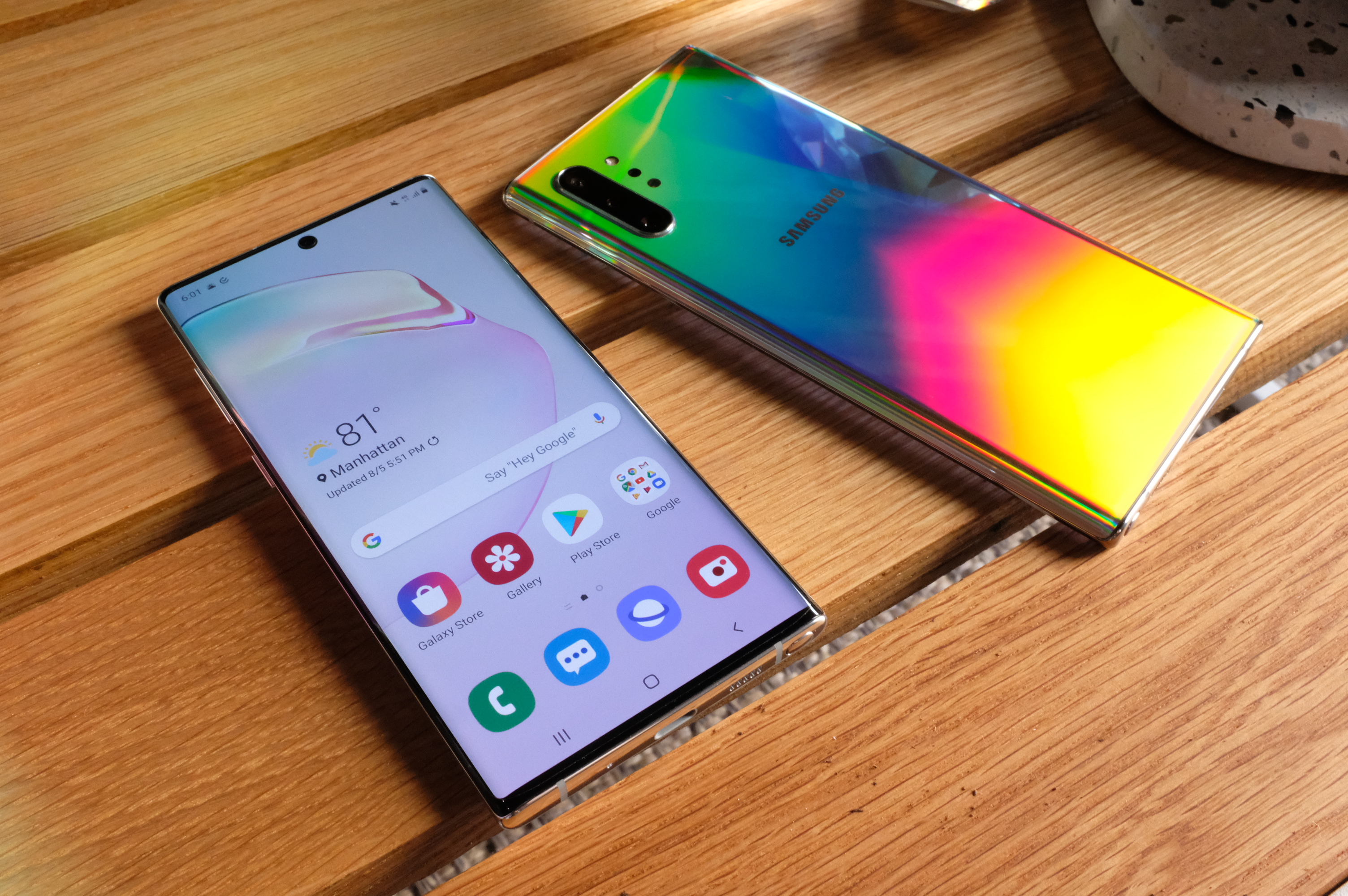
The base-level Note downgrades from 6.4 to 6.3 inches. Why? Samsung believes a move to a slightly smaller form factor makes the device that much more accessible. It’s a small concession, a literal fraction of an inch. But when you consider the fact that the newly introduced Note 10+ has roughly the same footprint as the Note 9, you begin to realize how much more compact the Note 10 is.

DSCF5798

That’s one thing Samsung has progressively gotten better at, year in, year out. The screen to body ratio on the new Notes is impressive. I’ve read a fair amount of critical hindsight recently about how the first Note was received as being “too large.” The fact of the matter is that it was massive, even by today’s standard. Sure, 5.3-inch is nothing in terms of screen size in 2019, but back then that required a lot more phone.

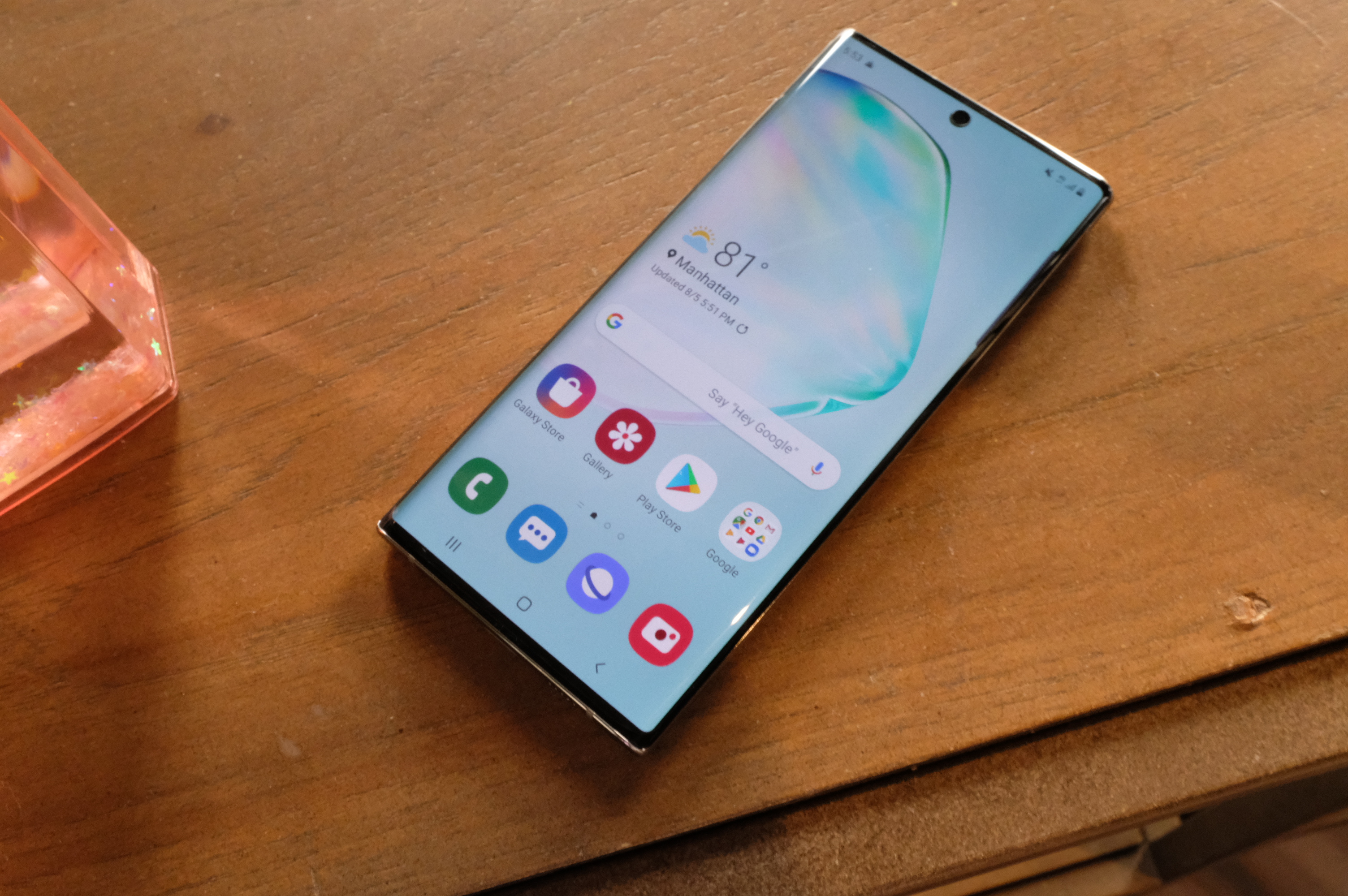
You’ve likely seen plenty of renders of the device before now — and they’ve basically all proven to be true. It’s a nice-looking phone. Samsung’s leaned in further on the curves, leaving little to no bezel on the thing. The cutout camera on the S10+ has been ditched in favor of a single small hole punch floating in the center (Samsung tells me it’s ditched the dual-selfies in favor of improving the single one via software, machine learning and the like).

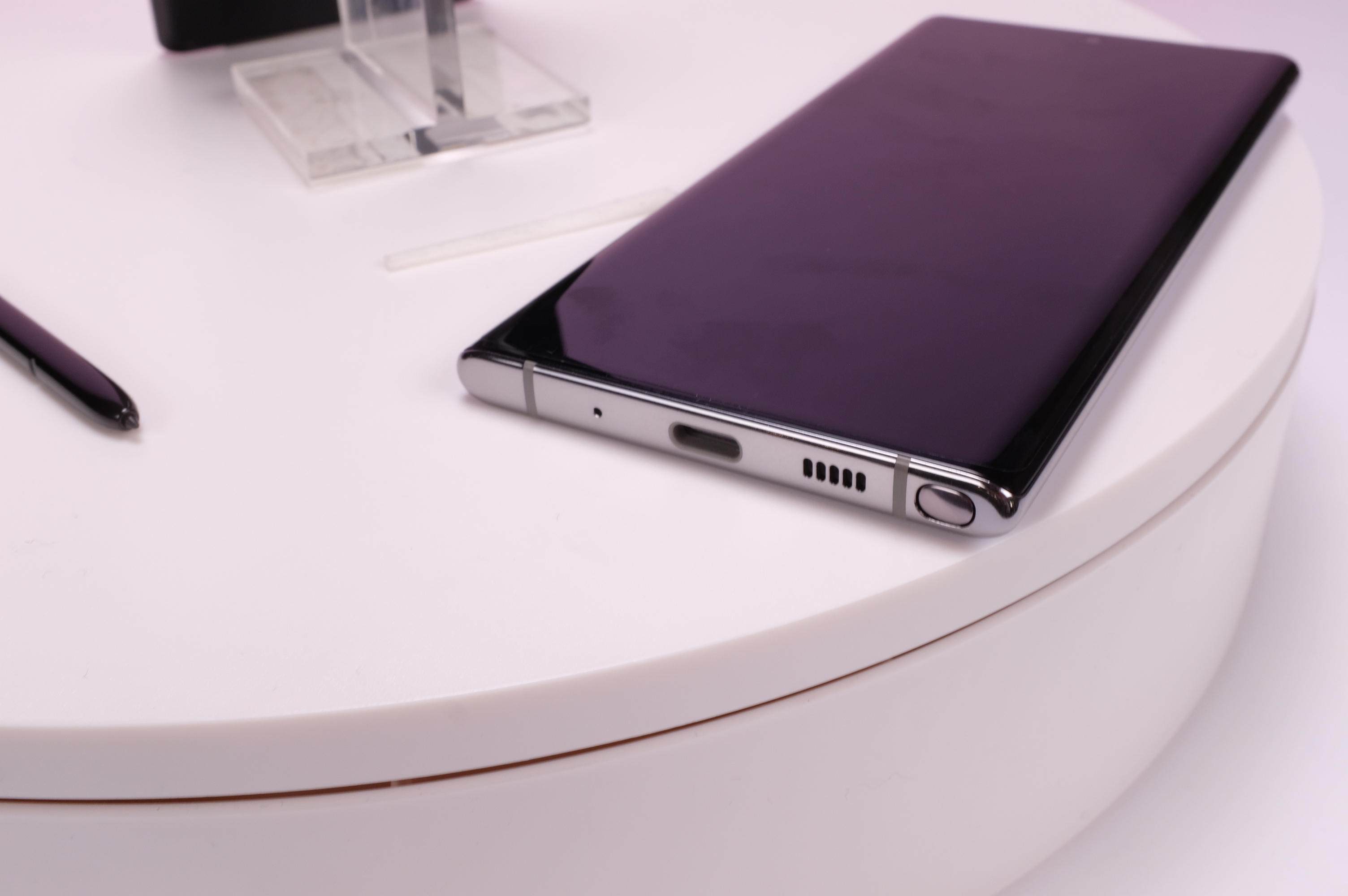
Also notably missing is the headphone jack. After years of mocking Apple and its ilk, the company’s inevitably eating a bit of crow on this one. The tipping point is two-fold. First, big batteries are back, at 3,500mAh on the 10 and 4,300mAh on the 10+. For reasons you know but we won’t get into here, Samsung put the larger battery on hold for a bit, in favor of additional safety precautions.

[gallery ids="1865842,1865841,1865840,1865839,1865837,1865912,1865897,1865896,1865891,1865885,1865884,1865883,1865881,1865871,1865870,1865869"]

The other big factor is the Bluetooth tipping point. The company says a majority of flagship owners are now listening to music through a wireless connection (anecdotally around 70+%). Obviously that figure drops when dealing with less expensive handsets — people buying mid- and low-tier devices are still less inclined to shell out for Bluetooth headphones. Expect Samsung to blow through this bit of news pretty quickly at today’s event.

DSCF5817

To help ease the shift, Samsung is including a pair of USB-C AKG headphones in the box. No dongle in-box, though. That’ll cost you.

Also gone is the standalone Bixby button. Instead, the power button summons Bixby with a long press. You can still remap that function, as well. Samsung is still pumping money into its smart assistant, but has generally acknowledged the lukewarm presence.

But enough of what we’re missing, right?

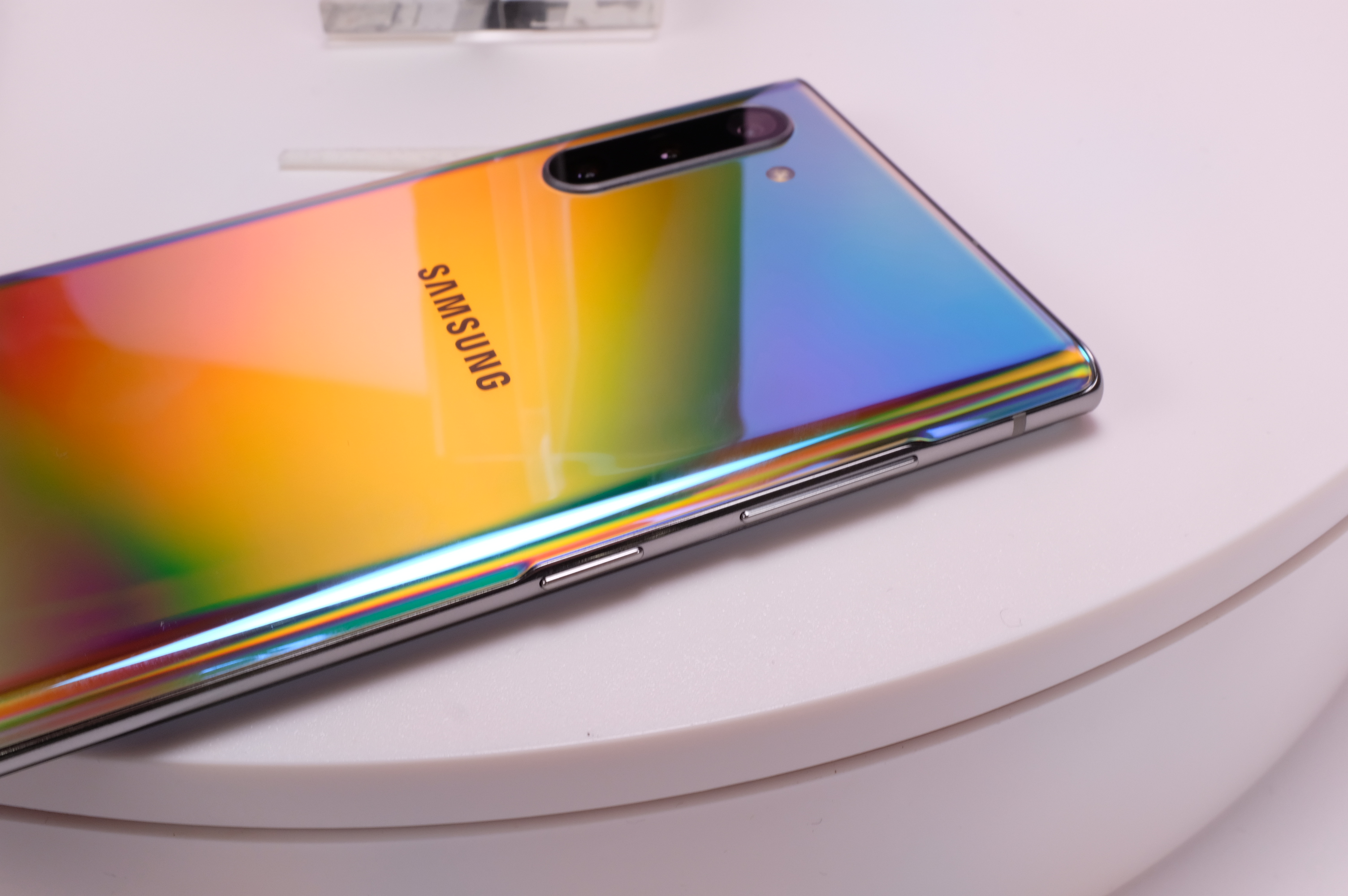
The back of the device (which sports some lovely new prism color schemes) sports a triple-camera area. There’s a 16 megapixel ultra wide, 12 megapixel standard wide angle and 12 megapixel telephoto. The 10+, meanwhile, brings a time of flight sensor, for added depth detection. It’s one of a small handful of distinctions between the models, including screen and battery size.

There are some nice software additions here, as well, including the ability to add a bokeh-style focus effect to video. Using the gyroscope and machine learning, the system dramatically reduces shake in photos.

The TOF sensor brings a 3D scanner feature to the camera, so users can scan an object and turn it into a moveable render. Honestly, that one still feels pretty niche. The company adds that there are some additional potential AR features there, though those will be in the hands of developers.

DSCF5807

Zoom-In Mic is a cool addition to video, which uses the mic array to direct sound recordings to the spot where you’ve focused the camera. That will be a cool one to test out when we get more time with the phone in the near future. Night Mode, meanwhile, has been added to the 10 megapixel front-facing camera for all of those low-light selfies.

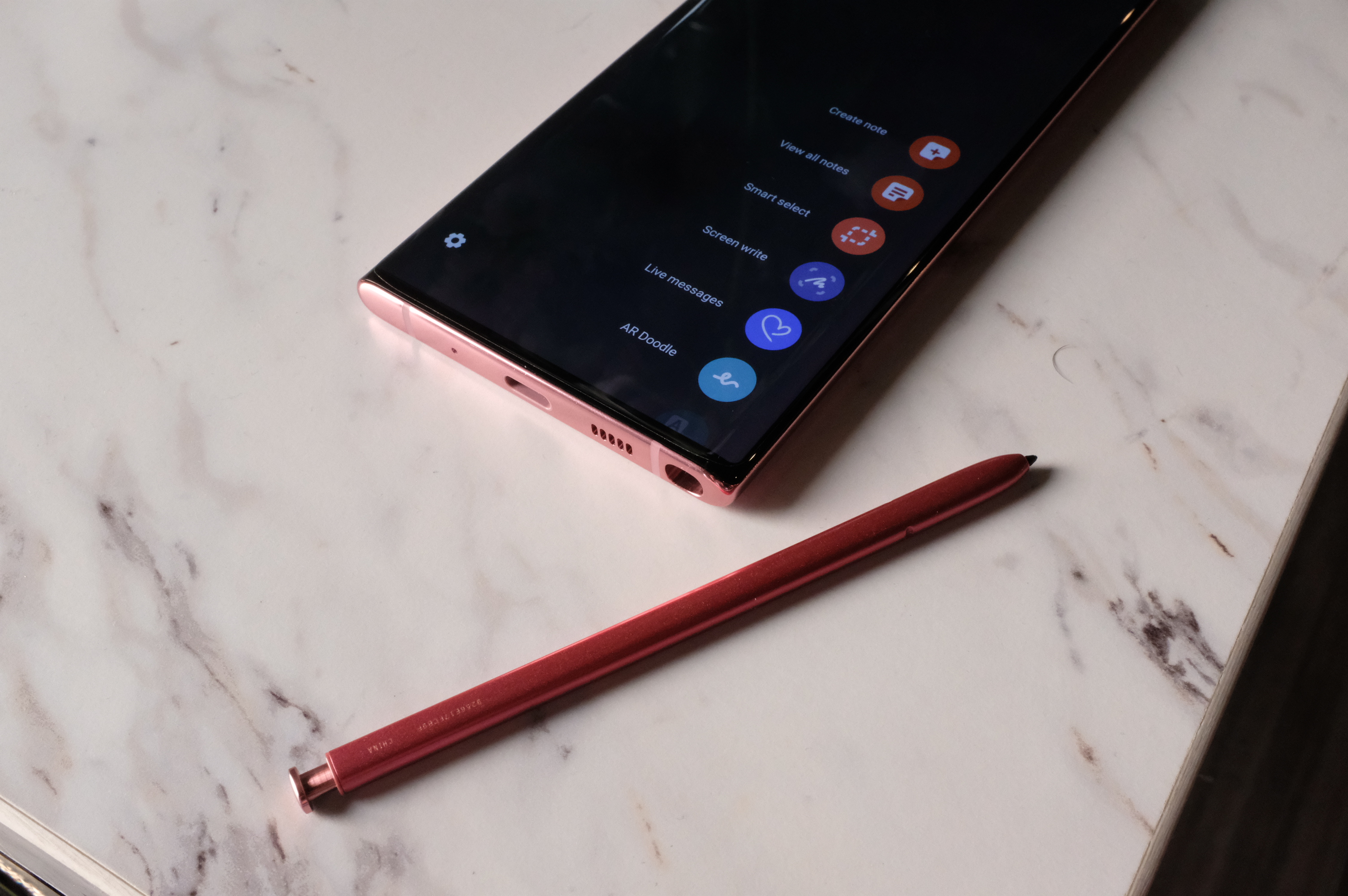
AR Doodle is one of the neater camera software add-ons, letting users scribble on spots in space with the S Pen or add images and masks to faces. Move the phone around the room and they maintain their position. Add that one to the fun-but-not-particularly-useful list of AR applications.

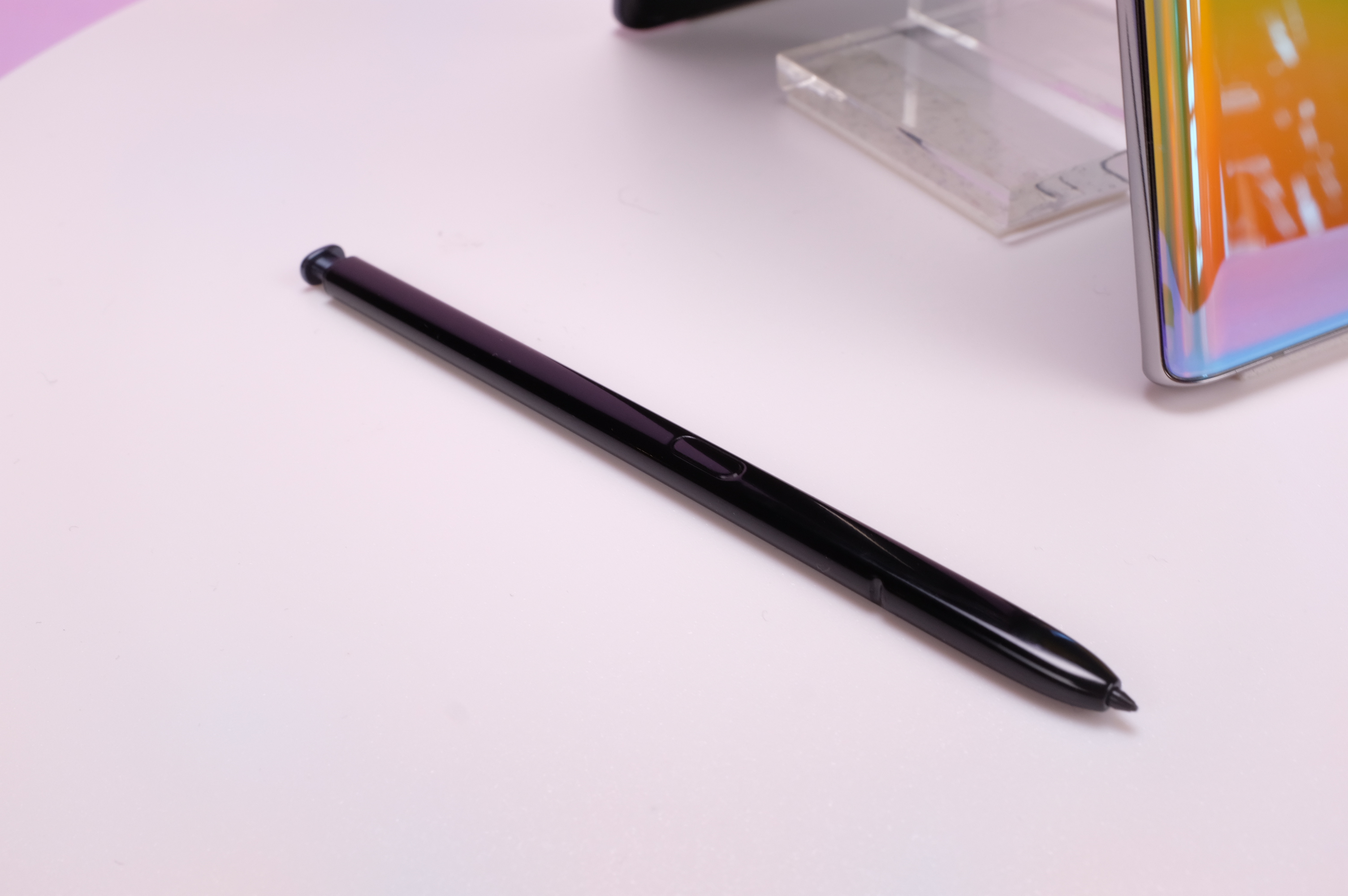
The S Pen itself has shifted to a more solid unibody design. Samsung has also added the ability to create custom gestures with the input device On the software front the main addition is better handwriting recognition. I tried it out and it did a pretty solid job with my horrible chicken scratch.

DSCF5855

DeX continues to be a a key piece of the puzzle for Amazon. Here that includes new drag and drop capabilities between the Note and a connected Mac or PC. The company says the feature is much improved over past attempts at Android/desktop functionality. Honestly, the DeX branding is getting a bit cloudy at this point — that’s only made more murky by the addition of a non-DeX Link to Windows feature that brings notifications and messages straight to a connected Windows 10 PC.

That’s more of a minor branding quibble, though.

Inside you’re getting the Qualcomm Snapdragon 855 (not plus, mind), coupled with 8GB of RAM on the 10 and 12GB on the 10+. Both versions feature a base 256GB of storage (no microSD), while the 10+ also has a 512GB version.

As usual, nothing too major to complain about here. The Note 10 feels like a pretty small upgrade in the grand scheme of things. The biggest news this time out is the addition of a second, XL size.

DSCF5860

Pre-orders open tomorrow, August 8th for both. They’ll be in stores on the 23rd. The 10 starts at $950 and the 10+ starts at $1,100. Pre-order deals include accessories like the Charging Duo pad and Galaxy Watch Active.

There’s a 5G version of the Note 10+ available, as well, at the same time. That’s going to be a Verizon exclusive at launch, however, with pricing still TBD.


from blogger-2 https://ift.tt/2YXlunW
via IFTTT

There’s a 5G version of Samsung’s Galaxy Note 10+ headed for Verizon

The 5G iPhone isn’t expected until roughly this time next year. But when it comes to the next-gen cellular technology, Samsung has already been there and done that. Back in the February, the company announced an everything and the kitchen sink version of the Galaxy S10, sporting 5G — its first device to do so. The model was finally made available last month.

At this afternoon’s Unpacked event in Brooklyn, the Note got its own 5G version — though the device got a little less time in the spotlight. That’s due, in part, to the 5G model is otherwise very little daylight between it and the standard Note 10+. Well, that and pricing, of course.

The device launches August 23 as a Verizon exclusive, running $1,300 to the standard version’s $1,100. The carrier partnership means there’s also a $36 a month for 36 months licensing model here.

Other details, including how the product’s battery will last with 5G switched on, are still TBD. Thankfully the Note 10+ has a pretty beefy 4,300mAh battery as a base. The devices also feature Samsung’s standard vapor chamber cooling system, which will hopefully address some of 5G’s overheating issues.

As with the other versions, pre-orders open at midnight tonight, and all will be available in stores on the 23. The exclusivity is limited. T-Mobile, Sprint and AT&T are all getting their hands on the 5G handset, likely before end of year. 


from blogger-2 https://ift.tt/2M8ouaS
via IFTTT