Thursday, May 23, 2019

Wednesday, May 22, 2019
Mona Lisa frown: Machine learning brings old paintings and photos to life
Machine learning researchers have produced a system that can recreate lifelike motion from just a single frame of a person’s face, opening up the possibility of animating not just photos but also paintings. It’s not perfect, but when it works, it is — like much AI work these days — eerie and fascinating.
The model is documented in a paper published by Samsung AI Center, which you can read here on Arxiv. It’s a new method of applying facial landmarks on a source face — any talking head will do — to the facial data of a target face, making the target face do what the source face does.
This in itself isn’t new — it’s part of the whole synthetic imagery issue confronting the AI world right now (we had an interesting discussion about this recently at our Robotics + AI event in Berkeley). We can already make a face in one video reflect the face in another in terms of what the person is saying or where they’re looking. But most of these models require a considerable amount of data, for instance a minute or two of video to analyze.
The new paper by Samsung’s Moscow-based researchers, however, shows that using only a single image of a person’s face, a video can be generated of that face turning, speaking and making ordinary expressions — with convincing, though far from flawless, fidelity.
It does this by frontloading the facial landmark identification process with a huge amount of data, making the model highly efficient at finding the parts of the target face that correspond to the source. The more data it has, the better, but it can do it with one image — called single-shot learning — and get away with it. That’s what makes it possible to take a picture of Einstein or Marilyn Monroe, or even the Mona Lisa, and make it move and speak like a real person.

In this example, the Mona Lisa is animated using three different source videos, which as you can see produce very different results, both in facial structure and behavior.
It’s also using what’s called a Generative Adversarial Network, which essentially pits two models against one another, one trying to fool the other into thinking what it creates is “real.” By these means the results meet a certain level of realism set by the creators — the “discriminator” model has to be, say, 90% sure this is a human face for the process to continue.
In the other examples provided by the researchers, the quality and obviousness of the fake talking head varies widely. Some, which attempt to replicate a person whose image was taken from cable news, also recreate the news ticker shown at the bottom of the image, filling it with gibberish. And the usual smears and weird artifacts are omnipresent if you know what to look for.
That said, it’s remarkable that it works as well as it does. Note, however, that this only works on the face and upper torso — you couldn’t make the Mona Lisa snap her fingers or dance. Not yet, anyway.
from blogger-2 https://tcrn.ch/30G2gBh
via IFTTT
Saturday, May 18, 2019
Immigrant founders, smartphone growth, SEO tactics, SoftBank’s financials, and AR tech
How an immigration crackdown is hurting UK startups
Our European correspondent Natasha Lomas spent the past few weeks investigating what’s been happening to immigrant founders and tech talent in the UK, who have been receiving more scrutiny from the Home Office in recent months. Natasha zooms in on Metail, a virtual fitting room startup, and its tribulations with the immigration authorities and the damage those action are having on the broader ecosystem:
The January 31 decision letter, which TechCrunch has reviewed, shows how the Home Office is fast-tracking anti-immigrant outcomes. In a short paragraph, the Home Office says it considered and dismissed an alternative outcome — of downgrading, not revoking, the license and issuing an “action plan” to rectify issues identified during the audit. Instead, it said an immediate end to the license was appropriate due to the “seriousness” of the non-compliance with “sponsor duties”.
The decision focused on one of the two employees Metail had working on a Tier 2 visa, who we’ll call Alex (not their real name). In essence, Alex was a legal immigrant had worked their way into a mid-level promotion by learning on the job, as should happen regularly at any good early-stage startup. The Home Office, however, perceived the promotion to have been given to someone without proper qualifications, over potential native-born candidates.
In addition to reporting the story, Natasha also wrote a guide specifically for Extra Crunch members on how founders can manage their immigration matters, both for themselves and for their employees.

The state of the smartphone
TechCrunch hardware editor Brian Heater analyzed the slowdown in smartphone sales, finding few reasons to be optimistic about how smaller handset manufacturers can compete with giants like Apple and Samsung. There are slivers of good news from the developing world and also from 5G and foldable tech, but don’t expect profits to reach their zenith again any time soon.
from blogger-2 https://tcrn.ch/2VMSVZf
via IFTTT
Friday, May 17, 2019
The state of the smartphone
Earlier this month, Canalys used the word “freefall” to describe its latest reporting. Global shipments fell 6.8% year over year. At 313.9 million, they were at their lowest level in nearly half a decade.
Of the major players, Apple was easily the hardest hit, falling 23.2% year over year. The firm says that’s the “largest single-quarter decline in the history of the iPhone.” And it’s not an anomaly, either. It’s part of a continued slide for the company, seen most recently in its Q1 earnings, which found the handset once again missing Wall Street expectations. That came on the tale of a quarter in which Apple announced it would no longer be reporting sales figures.
Tim Cook has placed much of the iPhone’s slide at the feet of a disappointing Chinese market. It’s been a tough nut for the company to crack, in part due to a slowing national economy. But there’s more to it than that. Trade tensions and increasing tariffs have certainly played a role — and things look like they’ll be getting worse before they get better on that front, with a recent bump from a 10 to 25% tariff bump on $60 billion in U.S. goods.
It’s important to keep in mind here that many handsets, regardless of country of origin, contain both Chinese and American components. On the U.S. side of the equation, that includes nearly ubiquitous elements like Qualcomm processors and a Google-designed operating system. But the causes of a stagnating (and now declining) smartphone market date back well before the current administration began sowing the seeds of a trade war with China.

Image via Miguel Candela/SOPA Images/LightRocket via Getty ImagesThe underlying factors are many. For one thing, smartphones simply may be too good. It’s an odd notion, but an intense battle between premium phone manufacturers may have resulted in handsets that are simply too good to warrant the long-standing two-year upgrade cycle. NPD Executive Director Brad Akyuz tells TechCrunch that the average smartphone flagship user tends to hold onto their phones for around 30 months — or exactly two-and-a-half years.
That’s a pretty dramatic change from the days when smartphone purchases were driven almost exclusively by contracts. Smartphone upgrades here in the States were driven by the standard 24-month contract cycle. When one lapsed, it seemed all but a given that the customer would purchase the latest version of the heavily subsidized contract.
But as smartphone build quality has increased, so too have prices, as manufacturers have raised margins in order to offset declining sales volume. “All of a sudden, these devices became more expensive, and you can see that average selling price trend going through the roof,” says Akyuz. “It’s been crazy, especially on the high end.”
from blogger-2 https://tcrn.ch/2M0JxwC
via IFTTT
Thursday, May 16, 2019
Samsung’s 5G phone hits Verizon, Sprint getting two 5G devices this month
With 5G, when it rains, it pours. A few hours after Verizon officially started selling the Samsung Galaxy S10 5G, Sprint announced that it will be offering two 5G devices for its network by the end of the month.
For now, it still feels like manufacturers are putting the cart before the horse here. There’s little question that 5G will become ubiquitous in the next few years, but actual opportunities to access the technology are still pretty scarce.
Among U.S. carriers, Verizon (or parent company’s parent company) has been the most aggressive. Fitting then, that the company is first to market with the Galaxy S10 5G. Of course all of these devices while default to 4G when there’s no 5G to be found, which is going to be the case more often than not for a while.
Verizon’s 5G is currently available in select markets, including Chicago and Minneapolis. That number is set to balloon to 20 before year’s end, including, Atlanta, Boston, Charlotte, Cincinnati, Cleveland, Columbus, Dallas, Des Moines, Denver, Detroit, Houston, Indianapolis, Kansas City, Little Rock, Memphis, Phoenix, Providence, San Diego, Salt Lake City and Washington, DC.
Sprint, meanwhile, has promised to flip on 5G in nine markets “in the coming weeks.” The list includes parts of Atlanta, Dallas, Houston and Kansas City, and then locations in Los Angeles, New York City, Phoenix and Washington D.C.
To celebrate, the network will be offering two 5G devices this month. The LG V50 ThinQ and HTC 5G Hub will hit Sprint stores on May 31.
from blogger-2 https://tcrn.ch/2JIb1Vi
via IFTTT
MultiVu raises $7M seed round for its next-gen 3D sensor
MultiVu, a Tel Aviv-based startup that is developing a new 3D imaging solution that only relies on a single sensor and some deep learning smarts, today announced that it has raised a $7 million seed round. The round was led by crowdfunding platform OurCrowd, Cardumen Captial and Hong Kong’s Junson Capital.
Tel Aviv University’s TAU Technology Innovation Momentum Fund supported some of the earlier development of MultiVu’s core technology, which came out of Prof. David Mendlovic’s lab at the university. Mendlovic previously co-founded smartphone camera startup Corephotonics, which was recently acquired by Samsung.
The promise of MultiVu’s sensor is that it can offer 3D imaging with a single-lens camera instead of the usual two-sensor setup. This single sensor can extract depth and color data in a single shot.
This makes for a more compact setup and, by extension, a more affordable solution since it requires fewer components. All of this is powered by the company’s patented light field technology.
Currently, the team is focusing on using the sensor for face authentication in phones and other small devices. That’s obviously a growing market, but there are also plenty of other application for small 3D sensors, ranging from other security use cases to sensors for self-driving cars.
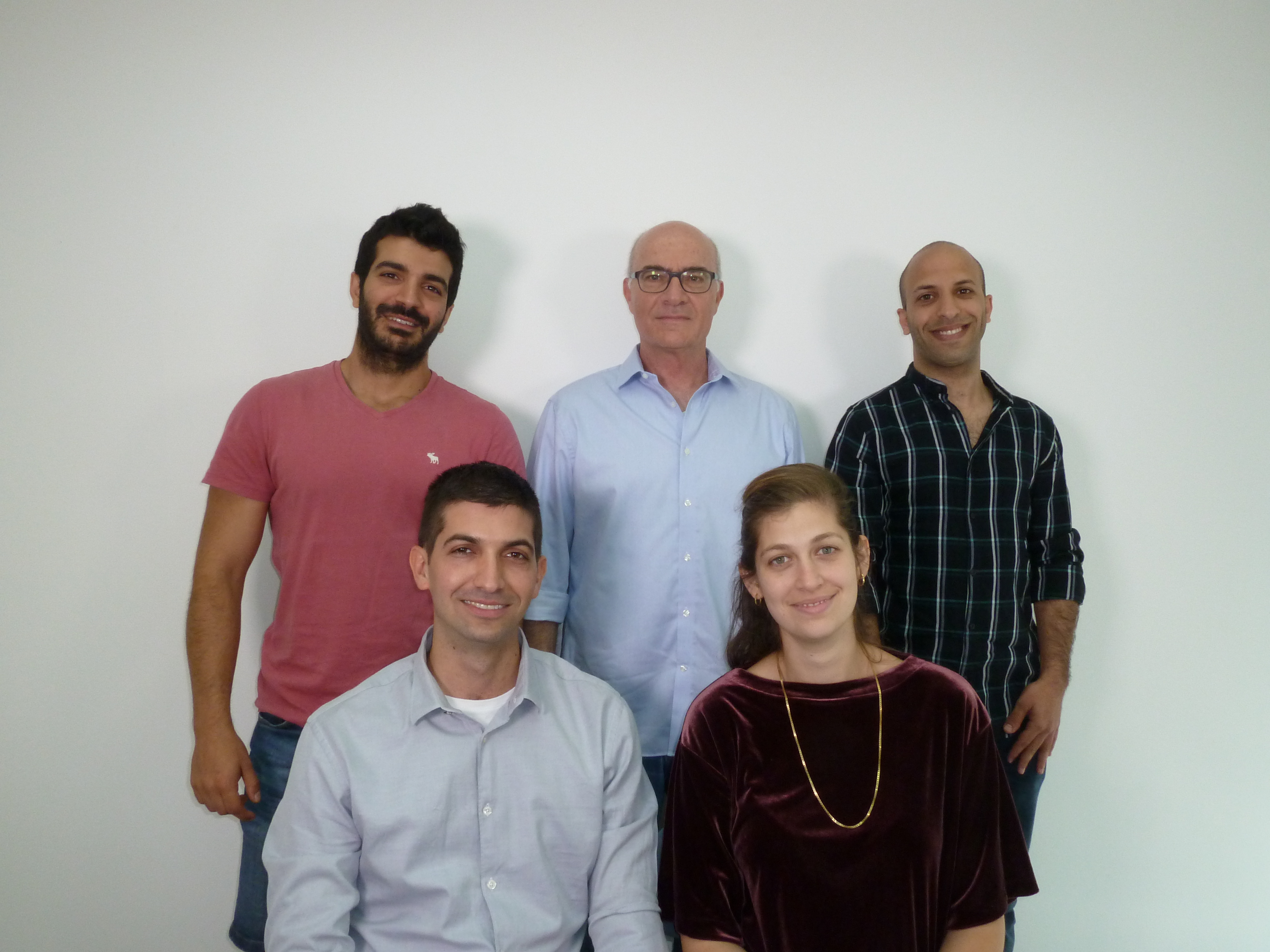
“The technology, which passed the proof-of-concept stage will bring 3D Face Authentication and affordable 3D imaging to the mobile, automotive, industrial and medical markets,” MultiVu CEO Doron Nevo said. “We are excited to be given the opportunity to commercialize this technology.”
Right now, though, the team is mostly focusing on bringing its sensor to market, though. The company will use the new funding for that, as well as new marketing and business development activities.
“We are pleased to invest in the future of 3D sensor technologies and believe that MultiVu will penetrate markets, which until now could not take advantage of costly 3D imaging solutions,” said OurCrowd Senior Investment Partner Eli Nir. “We are proud to be investing in a third company founded by Prof. David Mendlovic (who just recently sold CorePhotonics to Samsung), managed by CEO Doron Nevo – a serial entrepreneur with proven successes and a superb team they have gathered around them.”
from blogger-2 https://tcrn.ch/2Yz0z6q
via IFTTT
Samsung reportedly readying Galaxy Fold for release after finding ‘fix’
Samsung’s been mostly quiet on the Fold front after recalling review units and indefinitely delaying the phone’s release. Understandably so. It couldn’t have been easy going back to the drawing board with one of buzziest handsets in recent memory. While we’ve been waiting word, the company has been exploring fixes and attempting to determine the magnitude of the issue.
According to reporting from Yonhap News Agency, Samsung is currently testing the handset with mobile carriers in Korea, putting the phone’s official release some time next month. There are a few grains of salt to be taken from these unnamed sources. The release timeframe depends on approval from carriers and will vary country by country.
What is notable, however, is that Samsung has apparently found fixes for the two primary problems. First there’s the issue with the protective laminate, which some reviewers apparently peeled off. I get it. I looks an awful lot like the peel-able screen covers the company’s phones ship with.
The protective cover will remain, but the edges will be tucked away, making it much more difficult to remove. As for the issue with matter falling through cracks in the hinge and getting wedged behind the display, Samsung’s apparently just making the holes in smaller.
Last week, CEO DJ Koh addressed the issue, noting that “news” was coming soon. This isn’t that, but Samsung does appear to still be committed to what could ultimately prove a very pricy mistake. At $1,980, consumers, too, are advised to approach this one with caution.
from blogger-2 https://tcrn.ch/2WGUIeZ
via IFTTT