Tuesday, May 14, 2019

AR display-maker DigiLens lands $50 million from Samsung, Niantic

The broader AR market is made up of a lot of hype and excitement, but fundamentally it’s all based around the promise that waveguide displays can continue to stay wafer-thin while getting better and cheaper.

Waveguide-maker DigiLens is aiming to stay aggressive in lowering the costs of the expensive component. It has just closed a $50 million Series C led by Universal Display Corporation’s venture arm alongside Samsung Ventures. The company had previously disclosed that Pokémon GO-maker Niantic and Mitsubishi were making a strategic investment in this round. This brings the startup’s total funding to $85 million.

The Sunnyvale, Calif. startup most recently raised a $22 million round in early 2017, with investments from Foxconn, Sony and Panasonic.

Waveguide displays allow projected images to be “loaded” in from the side of a sheet of glass, thanks to etchings that bounce the light around to form a complete image in front of your eye. This is ideal for augmented reality, where you want as little hardware as possible directly in front of your eye. While optics that simply reflect an image onto a curved display are intensely cheaper, it’s going to take developments in waveguide tech to create consumer-friendly svelte designs that still showcase a high-definition image.

Aside from AR glasses, DigiLens is eyeing the automotive market as a market for its see-through displays.

In a statement, CEO Chris Pickett declared that his startup’s manufacturing process was building “the only waveguide that can get to a consumer price point.”

The startup will have to compete with major tech companies and other startups that are building their own technology. Magic Leap and Microsoft are designing their own waveguide displays for their latest AR headsets. Last year, Apple bought Akonia Holographics, a Denver startup building similar technology.


from blogger-2 https://tcrn.ch/30lhlYw
via IFTTT

Thursday, May 9, 2019

Smartphone shipments hit a five year low in North America

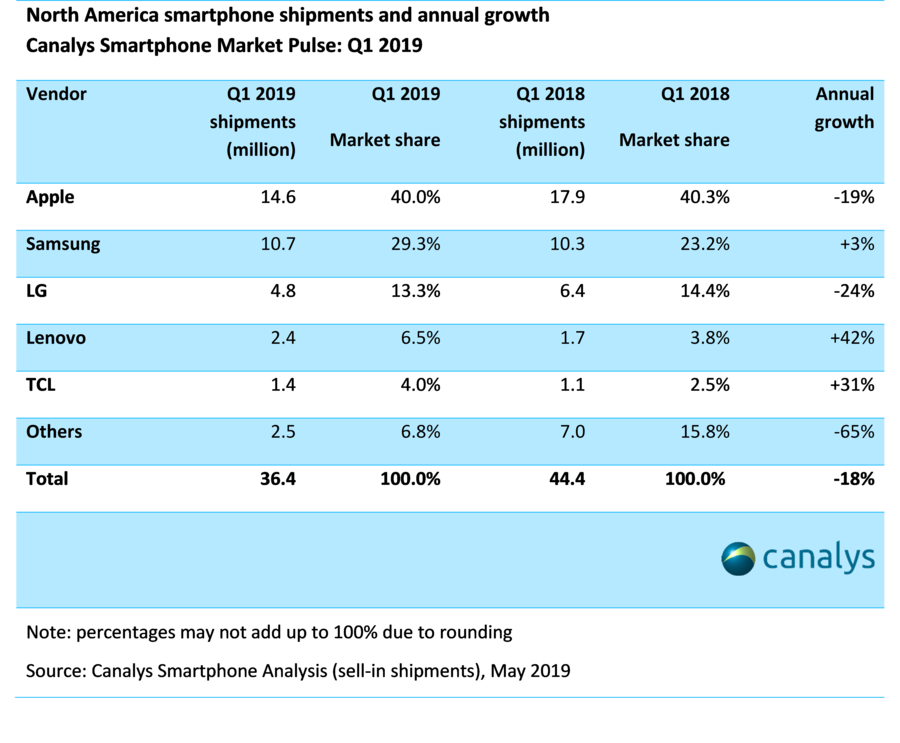
More dismal news from the smartphone number crunchers. New figures out of Canalys put the North American smartphone market at five year low for the first quarter of 2019. That’s…bad. But also, pretty inline with what we’ve been seeing globally. The market has stagnated, and while manufacturers aren’t in full on panic mode, there’s certainly cause for concern.

Shipments dropped from 44.4 million down to 36.4 million, marking an an 18 percent drop year over year for the first quarter. Canalys says it’s the steepest drop it’s recorded for the category, chalking some of the issues up to “a lackluster performance by Apple and the absence of ZTE.”

Apple is still the top of the heap, commanding 40 percent of the North American market with help from the sale of older discounted units. But Samsung managed to to tighten the gap on the back of a successful Galaxy S10 launch. The company grew by three percent for the year, up to 29.3 percent of the market.

LG, Lenovo and TCL rounded out the top five, with the latter two making pretty solid marketshare strides. The remainder of the market took a massive hit, however, with a 65 percent drop off in shipments. Analysts seem confident that 5G imminent arrival will help give the market a boost in coming quarters, but it’s going to be hard for manufacturers to maintain that momentum.


from blogger-2 https://tcrn.ch/2DXoSTQ
via IFTTT

Samsung’s CEO says Galaxy Fold launch news is arriving soon

Samsung has been understandably silent about the Galaxy Fold for the last couple of weeks. The company’s been reassessing issues with the foldable’s display after initially chalking problems with review units up to small sample sizes and user error. It’s tough to say how difficult and expensive a fix will be, but this surely isn’t the sort of press it was hoping for with its first to market device.

CEO DJ Koh is finally ready to talk about the Fold — or at least offer news that there will soon be news. The exec told The Korea Herald that Samsung, “has reviewed the defect caused from substances (that entered the device), and we will reach a conclusion in a couple of days (on the launch).”

What Koh appears to be referring to specifically are the gaps in the fold mechanism that allowed material to get behind the display, damaging it when pressure was applied to the touchscreen.

From the sound of things, Samsung is hoping to have an update on timing at some point this week or early next, at the latest. Koh added, “We will not be too late,” which the paper took to be a suggestion that the Fold will begin shipping earlier than expected.

Samsung no doubt is hoping to have it out sooner than later, but the Note debacle’s two recalls should serve as a reminder that these things ought not be rushed.


from blogger-2 https://tcrn.ch/2Ha8Zug
via IFTTT

Wednesday, May 8, 2019

Samsung spilled SmartThings app source code and secret keys

A development lab used by Samsung engineers was leaking highly sensitive source code, credentials and secret keys for several internal projects — including its SmartThings platform, a security researcher found.

The electronics giant left dozens of internal coding projects on a GitLab instance hosted on a Samsung-owned domain, Vandev Lab. The instance, used by staff to share and contribute code to various Samsung apps, services and projects, was spilling data because the projects were set to “public” and not properly protected with a password, allowing anyone to look inside at each project, access, and download the source code.

Mossab Hussein, a security researcher at Dubai-based cybersecurity firm SpiderSilk who discovered the exposed files, said one project contained credentials that allowed access to the entire AWS account that was being used, including over a hundred S3 storage buckets that contained logs and analytics data.

Many of the folders, he said, contained logs and analytics data for Samsung’s SmartThings and Bixby services, but also several employees’ exposed private GitLab tokens stored in plaintext, which allowed him to gain additional access from 42 public projects to 135 projects, including many private projects.

Samsung told him some of the files were for testing but Hussein challenged the claim, saying source code found in the GitLab repository contained the same code as the Android app, published in Google Play on April 10.

The app, which has since been updated, has more than 100 million installs to date.

“I had the private token of a user who had full access to all 135 projects on that GitLab,” he said, which could have allowed him to make code changes using a staffer’s own account.

Hussein shared several screenshots and a video of his findings for TechCrunch to examine and verify.

The exposed GitLab instance also contained private certificates for Samsung’s SmartThings’ iOS and Android apps.

Hussein also found several internal documents and slideshows among the exposed files.

“The real threat lies in the possibility of someone acquiring this level of access to the application source code, and injecting it with malicious code without the company knowing,” he said.

Through exposed private keys and tokens, Hussein documented a vast amount of access that if obtained by a malicious actor could have been “disastrous,” he said.
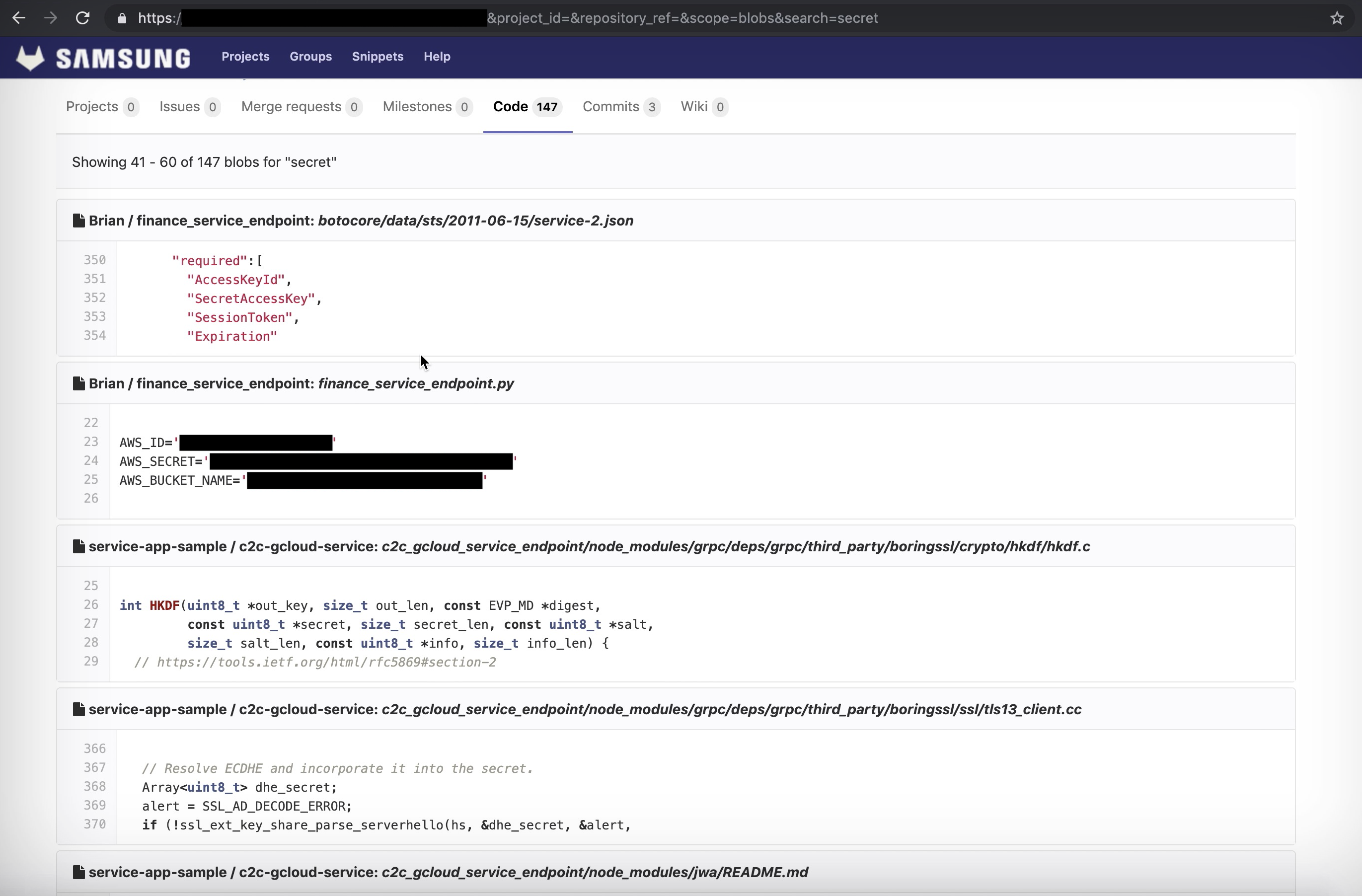
A screenshot of the exposed AWS credentials, allowing access to buckets with GitLab private tokens. (Image: supplied).

Hussein, a white-hat hacker and data breach discoverer, reported the findings to Samsung on April 10. In the days following, Samsung began revoking the AWS credentials but it’s not known if the remaining secret keys and certificates were revoked.

Samsung still hasn’t closed the case on Hussein’s vulnerability report, close to a month after he first disclosed the issue.

“Recently, an individual security researcher reported a vulnerability through our security rewards program regarding one of our testing platforms,” Samsung spokesperson Zach Dugan told TechCrunch when reached prior to publication. “We quickly revoked all keys and certificates for the reported testing platform and while we have yet to find evidence that any external access occurred, we are currently investigating this further.”

Hussein said Samsung took until April 30 to revoke the GitLab private keys. Samsung also declined to answer specific questions we had and provided no evidence that the Samsung-owned development environment was for testing.

Hussein is no stranger to reporting security vulnerabilities. He recently disclosed a vulnerable back-end database at Blind, an anonymous social networking site popular among Silicon Valley employees — and found a server leaking a rolling list of user passwords for scientific journal giant Elsevier.

Samsung’s data leak, he said, was his biggest find to date.

“I haven’t seen a company this big handle their infrastructure using weird practices like that,” he said.

Read more:


from blogger-2 https://tcrn.ch/2DV8xPv
via IFTTT

Monday, May 6, 2019

Week-in-Review: The iPhone fades and SpaceX confirms an explosion

After a dozen years of riding high, the iPhone is showing signs of weakness in a struggling smartphone market where Apple is still managing to be the biggest loser.

Here’s a snapshot of where things are…

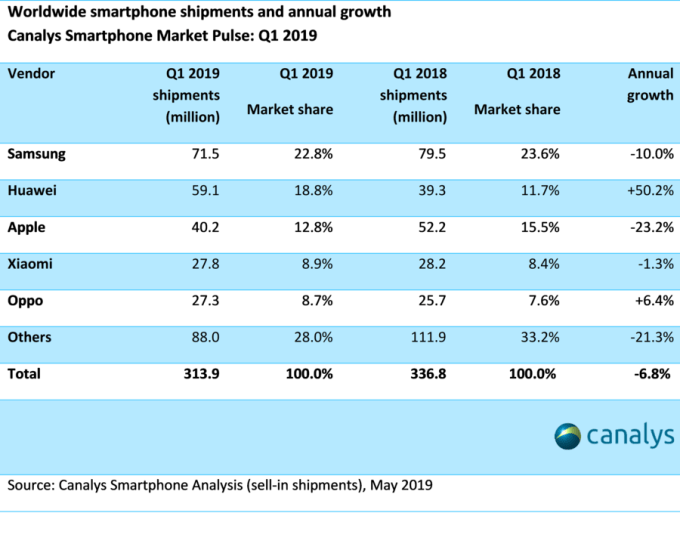
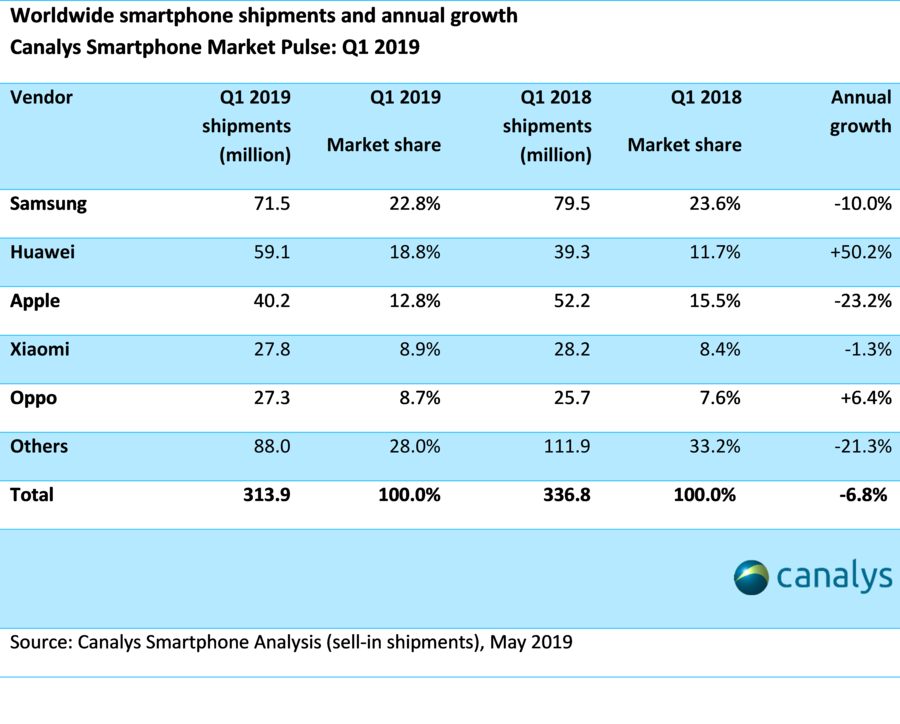
Apple hasn’t been broadcasting its quarterly unit sales the past few quarters, so we’ll have to lean on external researchers, but even the rosiest portrayal from Canalys suggests that the Cupertino giant saw a 23% drop in year-over-year iPhone unit sales, selling 40.2 million iPhones in Q2 of this year compared to 52.2 million iPhones a year ago.

That egregious drop takes Apple to its lowest Q2 unit sales since 2013, though the company has been solidly bumping up the average selling price in a move that has largely been working, though iPhone revenue was down 15% year-over-year, as well.

It’s not Apple’s cross to bear alone; the broader smartphone market has been in decline, down 6.8% year-over-year, according to the same report. But the iPhone’s decline contributed to roughly half of the global market’s missing units while China’s smartphone triumvirate of Huawei, Oppo and Xiaomi managed to buoy the broader sector from diving even lower.

Huawei’s unit sales shot up more than 50%.

Apple wasn’t the only non-Chinese phone maker wallowing in misery. Google cited a rough market for smartphones after delivering disappointing earnings, while Samsung saw a 10% decline in unit sales this quarter, according to Canalys.

Shoot me tips or feedback
on Twitter @lucasmtny or email
lucas@techcrunch.com

The smartphone market has had six straight quarters of year-over-year sales declines. This was the lowest quarter of smartphone unit sales in nearly five years. Whether Apple can better perform might be a question of how they can seek to differentiate themselves in China while still managing to squeeze consistent revenues from markets where it leads.

More doom-and-gloom from my buddy Brian Heater here:

iPhone hard hit as global smartphone shipments nosedive

On to the cheerier topic of dead robots…

AMY OSBORNE/AFP/Getty Images

Trends of the week

Here are a few big news items from big companies, with green links to all the sweet, sweet added context.

  • Zuckerberg tries again
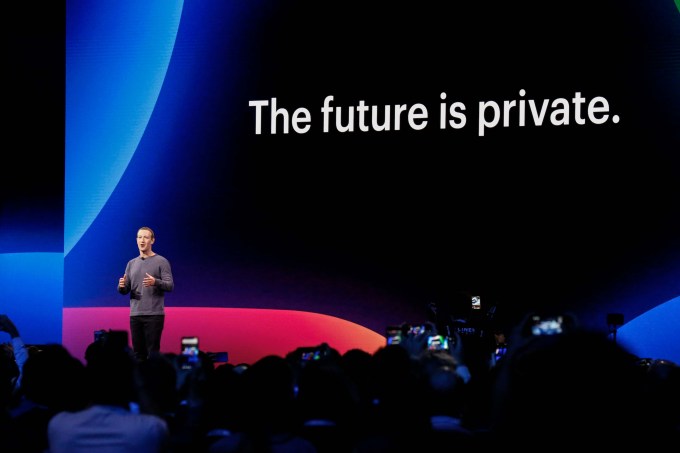
    Facebook is dead as you know it, or at least that’s what CEO Mark Zuckerberg wants you to think after his audacious relaunch of the company as a lover of privacy. The company gave its Facebook app and desktop site a major face lift and spoke at length about being better. Sitting in the audience, I couldn’t help but think that Zuckerberg was spinning for extra credit with decisions that had long been made. More from my colleague Josh Constine.
  • SpaceX cops to an explosion
    Elon Musk’s space company may have to push back its timeline for a manned launch after the company confirmed that its Dragon crew capsule exploded during testing. The disappointing development suggests SpaceX has some more work ahead of it before it’s ready to safely transport humans into space.
  • Another dead robot
    Cozmo won’t be scooting into any new homes; the startup behind the cute little robot is dead after the dissolution of a new funding round. Anki raised a staggering $182 million over the course of its life and sold 1.5 million of the curious, little wheeled bots, but now it seems to face the same lonely death as Jibo, which similarly perished a couple of months ago.
  • Palantir not so nice after all
    Peter Thiel’s Palantir has long held onto this very nefarious reputation as an evil company that’s working with government agencies and screwing over progressive ideals in the process. It wasn’t always super clear how true this was because it kind of seemed like Alex Karp and company was just scrambling to get private sector customers so it could justify its private valuation ahead of an IPO. Well, turns out the company is shitty after all.
  • Headset hullabaloo
    The VR market may be dead, but don’t tell that to the companies making VR headsets. Yes, the new headsets are still all bulky and weird but they are undoubtedly better. Oculus’ introduction of the Quest (reviewed here by me) and Rift S (review from me, again) next month might just add a little life to the dead VR dreams — and if that doesn’t work, Valve has a $1,000 option it’s now hocking.

Forward-looking statement

What’s coming up next week? Well, you can expect a bunch of Microsoft news at its Build developer conference and there will also assuredly be a lot emerging from Google I/O, where I’ll be spending a couple of days next week. Here’s what we think is coming…

What to expect from Google I/O 2019

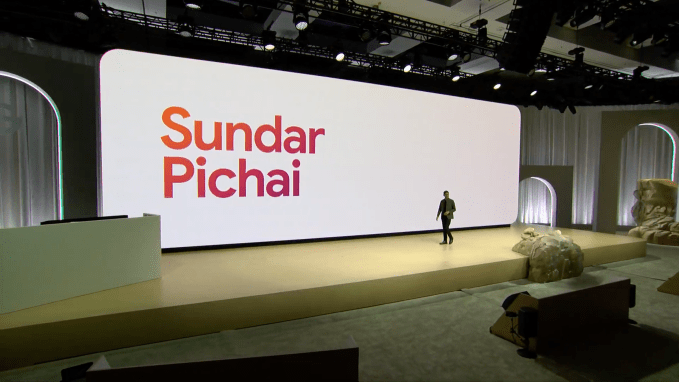
“…It’s shaping up to be a biggie, too, if this week’s Google earnings call was any indication. Sundar Pichai teased out a number of upcoming offerings from the company that we can expect to see on full display at the show…”

HVEPhoto/Getty Images

GAFA Gaffes

How did the top tech companies screw up this week? This clearly needs its own section, in order of awfulness: (This week was admittedly a little light on the gaffes, but don’t be too disappointed, that’s good!)

  1. Googlers aren’t happy about workplace retaliation:
    [Google employees are staging a sit-in to protest reported retaliation]
  2. Researchers studying Facebook’s ad platform aren’t getting the access they say they need:
    [Facebook accused of blocking wider efforts to study its ad platform]
  3. Apple wades into anti-competitive criticism with latest app bans:
    [Apple defends its takedown of some apps monitoring screen-time]

Horacio Villalobos//Corbis/Getty Images

Extra Crunch

Our premium subscription service roars ahead. We had a fascinating piece go up this week diving into Slack’s financial filings that discovered some discrepancies in the VC funding that was reported versus what was actually raised:

The curious case of Slack’s missing $162 million

“…Given that most of the stories covering Slack derived from the company’s own announcements, you would expect that those stories and the data in the S-1 would match. In short: they do, somewhat…”

Here are some of our other top reads this week for premium subscribers — you should catch up with our full Niantic deep-dive if you haven’t already; this list is a nice primer though…

Want more TechCrunch newsletters? Sign up here.


from blogger-2 https://tcrn.ch/2J6edL1
via IFTTT

Wednesday, May 1, 2019

iPhone hard hit as global smartphone shipments continue nosedive

The smartphone industry is in rough shape. Sundar Pichai used the word “headwinds” to discuss the company’s difficulties moving Pixel 3 units, but Canalys’ latest report is far more blunt, describing the situation as a “freefall.”

Things are pretty ugly in the Q1 report, as smartphone shipments declined for the sixth quarter in a row. The combined global units hit 313.9 million, marking their lowest point in almost half a decade, according to the firm.

Of the big players, Apple seems to be particularly hard hit, falling 23.2% year on year. Once again, China played a big role here, but as usual, the full story is much more complex.

“This is the largest single-quarter decline in the history of the iPhone,” said analyst Ben Stanton in a release tied to the news. “Apple’s second largest market, China, again proved tough. But this was far from its only problem. Shipments fell in the US as trade-in initiatives failed to offset longer consumer refresh cycles. In markets such as Europe, Apple is increasingly using discounts to prop up demand, but this is causing additional complexity for distributors, and blurring the value proposition of these ‘premium’ devices in the eyes of consumers.”

A lot to unpack there, but what we’re looking at are some larger issues within the industry, including global economic issues and slowed upgrade cycles for users. The XS was also notably much less dramatic of an upgrade than its predecessor. Stanton did add that the iPhone, “show[ed] signs of recovery towards the back-end of the quarter,” which is promising for Q2.

It also remains to be seen what this year will hold in terms of iPhone upgrades, though most signs point to 2020 as the year the company makes the jump to 5G. Tim Cook was noncommittal on the topic during the company’s earnings call last night, instead pointing to positive numbers on the iPad side and, of course, Apple’s continued push into services.

Analysts are somewhat bullish about the potential of innovations like 5G and even foldables in shaking up the stagnant market, but big players like Apple are clearly hedging their bets, should the free-falling headwinds continue.

Huawei, meanwhile, continues to be a bright spot, with a 50.2% year over year growth and an 18.8% global market share, according to the firm. That growth could be hampered, however, by increased competition from Samsung and fellow Chinese handset companies like Xiaomi and Oppo.


from blogger-2 https://tcrn.ch/2GNkVSl
via IFTTT

Samsung Ventures’ first investment in Southeast Asia is HR startup Swingvy

Samsung Ventures, the VC arm of the Korean electronics giant, has made its first investment in Southeast Asia after it backed HR startup Swingvy.

Singapore-based Swingy’s service provides HR services, payroll and insurance for SMEs on a freemium basis. The company announced this week that it raised $7 million that was led by the Samsung arm with participation from Aviva Ventures — from insurance firm Aviva — and Bass Investment. Existing investors Walden International and Big Basin Capital, which financed a previous $1.6 million round, also took part.

Founded in 2016, Swingvy claims to work with over 5,100 companies across Singapore, Malaysia and Taiwan. Those customers, some of which do not pay, have a cumulative user base of over 100,000 employees.

“Our target customer is SMEs not enterprise,” Jin Choeh, who is CEO and one of three Swingvy co-founders, told TechCrunch in an interview. “There are some local players, some legacy players and some startup competitors, but generally we saw that there’s no market leader for HR tech in Southeast Asia.”

The service itself covers areas such as an employee directory, processes for leave, performance management, company calendar, HR reporting, payroll and benefits. On the latter, Swingvy offers health insurance through partnerships with third-parties — Choeh said it is a licensed insurance agent. He said that new features coming soon include claims (for expenses and payments) while further down the line will be monthly insurance and corporate cards.

It is quite common for HR and other ‘base-level’ SME services to develop marketplaces that match their customers with third-party providers — we’ve seen that in Japan among very mature players, for example — but Swingvy isn’t going down that route. Choeh explained that it will consider offering its own services in areas where it believes it can give value to customers and control the quality and experience directly.

More broadly, the startup is aiming to triple its customer base to 15,000 this year thanks to this new injection of capital.

The initial focus is on hiring — Swingy plans to grow its headcount of 23 to over 60 this year — and more “aggressive” sales growth. That’ll mean bringing in a dedicated sales team, increasingly online advertising spend to reach new customers and being more visible around event marketing.

“Sales and marketing has been less than 10 percent of our spend,” said Choeh. “We’ve proved our model is quite cost efficient and we believe it is time to raise sales and marketing efforts.”

There’s no immediate plan to expand to new markets, but the Swingvy CEO said his company is eyeing potential expansions in 2020. Potential countries include Thailand, Vietnam and Japan, he said. Indonesia — Southeast Asia’s largest economy and the world’s fourth most populous country — is also under review, but Choeh said his team is aware that it is hyper-competitive while the market for paid SME products is particularly challenging.

What of the relationship with Samsung? For now, the relationship is financial rather than strategic, but Choeh admitted that there could be opportunities to work closely together in the future.


from blogger-2 https://tcrn.ch/2GGVMbO
via IFTTT