Wednesday, November 7, 2018

Samsung’s dual-screen folding phone is very strange and probably doomed

Let me just say that I love the idea of a folding phone/tablet device. I was a Courier fanboy when Microsoft floated that intriguing but abortive concept device, and I’m all for unique form factors and things that bend. But Samsung’s first real shot at a folding device is inexplicable and probably dead on arrival. I’d like to congratulate the company for trying something new, but this one needed a little more time in the oven.

I haven’t used it, of course, so this is just my uninformed opinion (provided for your edification). But this device is really weird, and not in a good way. It’s a really thick phone with big bezels around a small screen that opens up into a small tablet. No one wants that!

Think about it. Why do you want a big screen?

If it’s for media, like most people, consider that nearly all that media is widescreen now, either horizontal (YouTube and Netflix) or vertical (Instagram and Facebook). You can switch between these views at will extremely easily. Now consider that because of basic geometry, the “big” screen inside this device will likely not be able to show that media much, if any, larger than the screen on the front!

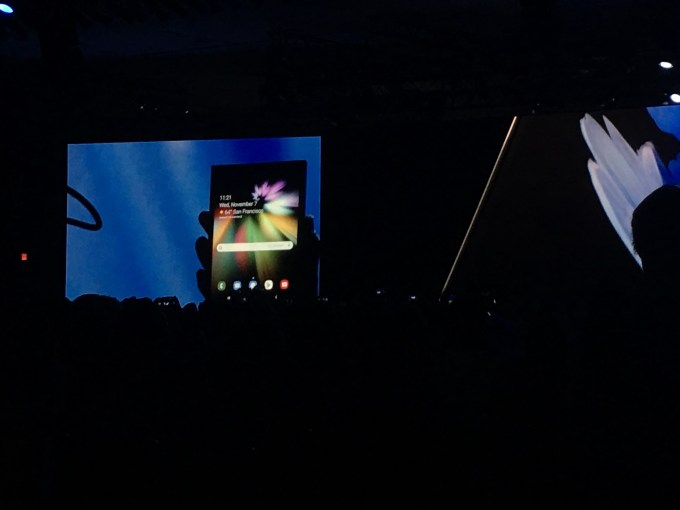
(Well, in this device’s case, maybe a little, but only because that front display’s bezel really is huge. Why do you think they turned the lights off? Look where the notification bar is!)
It’s like putting two of the tall screens next to each other. You end up with one twice as wide, but that’s pretty much what you get if you put the phone on its side. All you gain with the big screen is a whole lot of letterboxing or windowboxing. Oh, and probably about three quarters of an inch of thickness and half a pound of weight. This thing is going to be a beast.

Power users may also want a big screen for productivity: email and document handling and such is great on a big device like a Galaxy Note. Here then is opportunity for a folding tablet to excel (so to speak). You can just plain fit more words and charts and controls on there. Great! But if the phone is geared toward power users, why even have the small screen on the front anyway if any time that user wants to engage with the phone they will “open” it up? For quick responses or dismissing notifications, maybe, but who would really want that? That experience will always be inferior to the one the entire device is designed around.

I would welcome a phone that was only a book-style big internal screen, and I don’t think it would be a bother to flip it open when you want to use it. Lots of people with giant phones keep book-like covers on their devices anyway! It would be great to be able to use those square inches for the display rather than credit card slots or something.
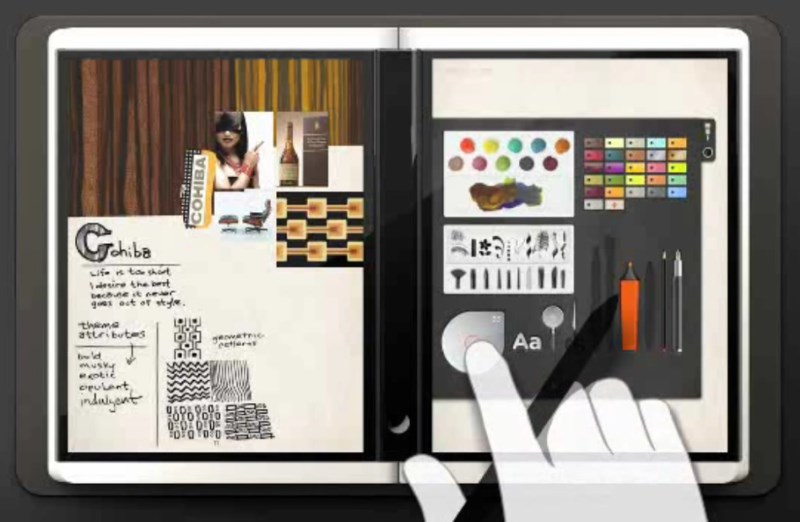
The Courier had tons of great ideas on how to use two screens.

There are also creative ways to use the screen: left and right halves are different apps; top half is compose and bottom is keyboard; left half is inbox and right half is content; top half is media and bottom is controls and comments. Those sprang to mind faster than I could type them.

On the other hand, I can’t think of any way that a “front” display could meaningfully interact with or enhance a secondary (or is it primary?) display that will never be simultaneously visible. Presumably you’ll use one or the other at any given time, meaning you literally can’t engage the entire capability of the device.

You know what would be cool? A device like this that also used the bezel display we’ve seen on existing Galaxy devices. How cool would it be to have your phone closed like a book, but with an always-on notification strip (or two!) on the lip, telling you battery, messages and so on? And maybe if you tapped once the device would automatically pop open physically! That would be amazing! And Samsung is absolutely the company that I’d say would make it.

Instead, they made this thing.

It’s disappointing to me not just because I don’t like the device as they’ve designed it, but because I think the inevitable failure of the phone will cool industry ambition regarding unique devices like it. That’s wrong, though! People want cool new things. But they also want them to make sense.

I’m looking forward to how this technology plays out, and I fully expect to own a folding phone some time in the next few years. But this first device seems to me like a major misstep, and one that will set back that flexible future rather than advance it.


from blogger-2 https://ift.tt/2PKqMOH
via IFTTT

Here’s what Samsung’s wacky folding phone looks like in action

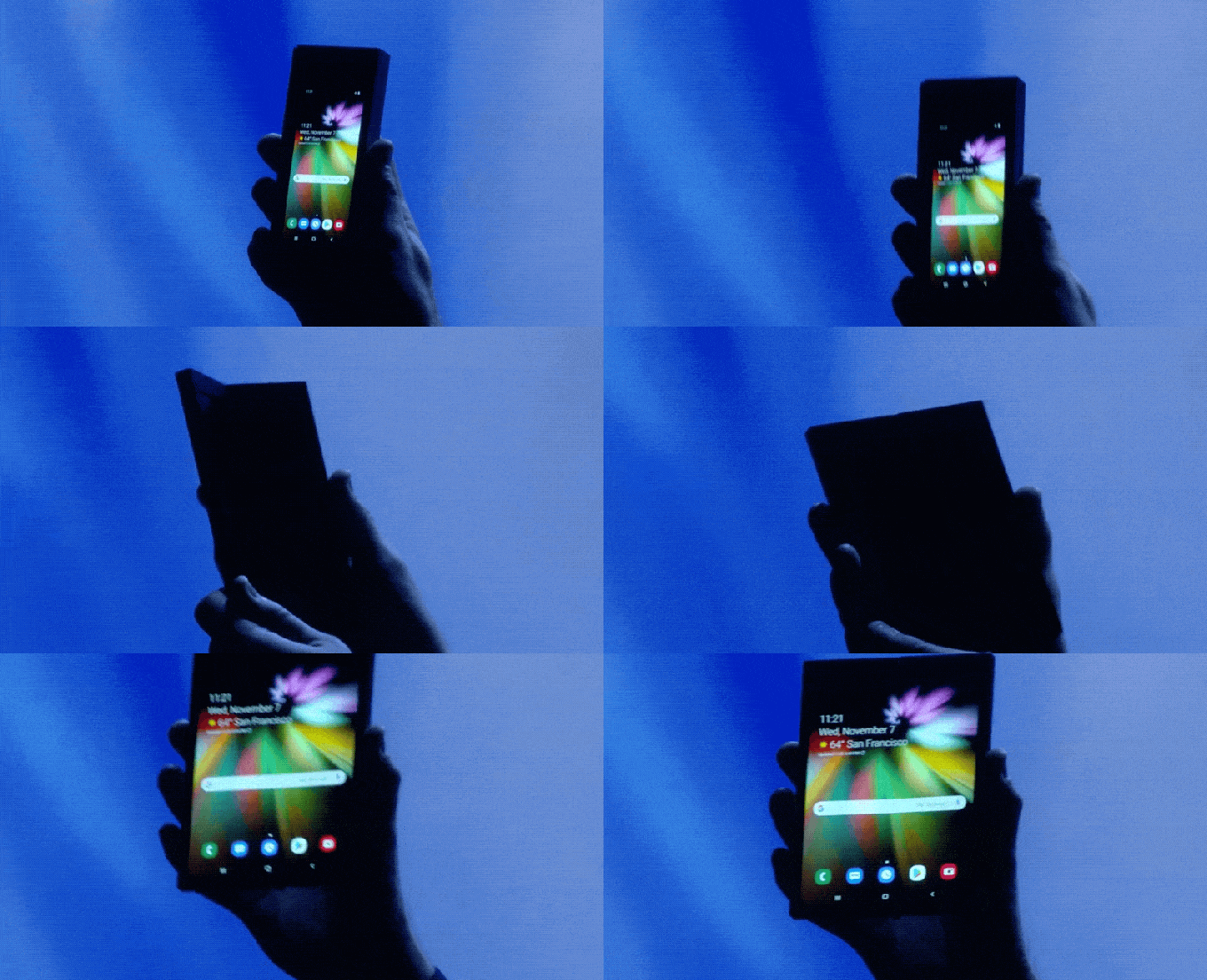
As rumored, Samsung showed off a prototype of a folding display today. Folded, it’s a smartphone. Unfolded, it’s a tablet. Neat!

Less neat: The company sort of went out of its way to not really show very much. A prototype was onstage for about 45 seconds, and it was deliberately backlit to be intensely silhouetted. They “disguised the elements of the design” to keep secret whatever secret sauce they have.

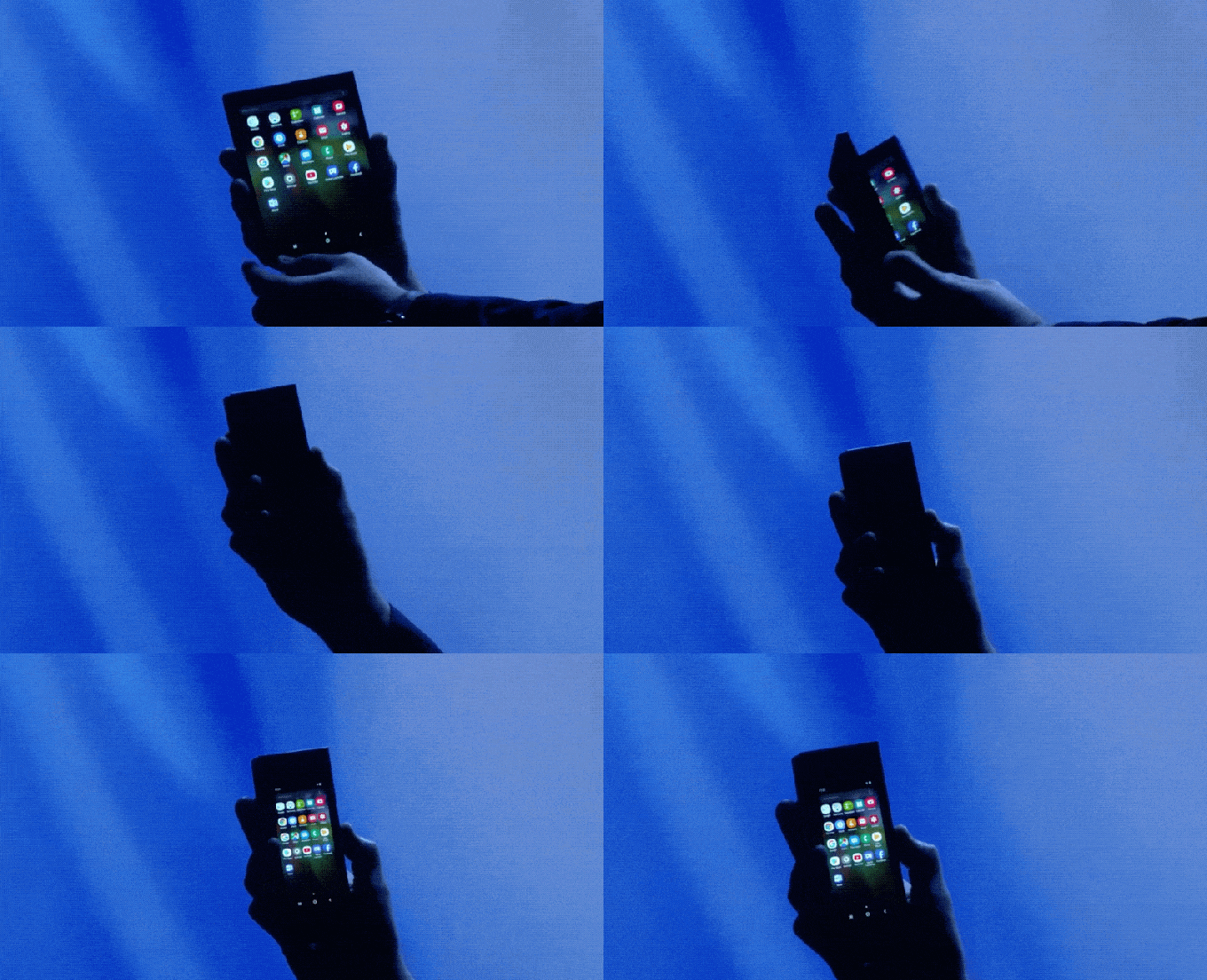
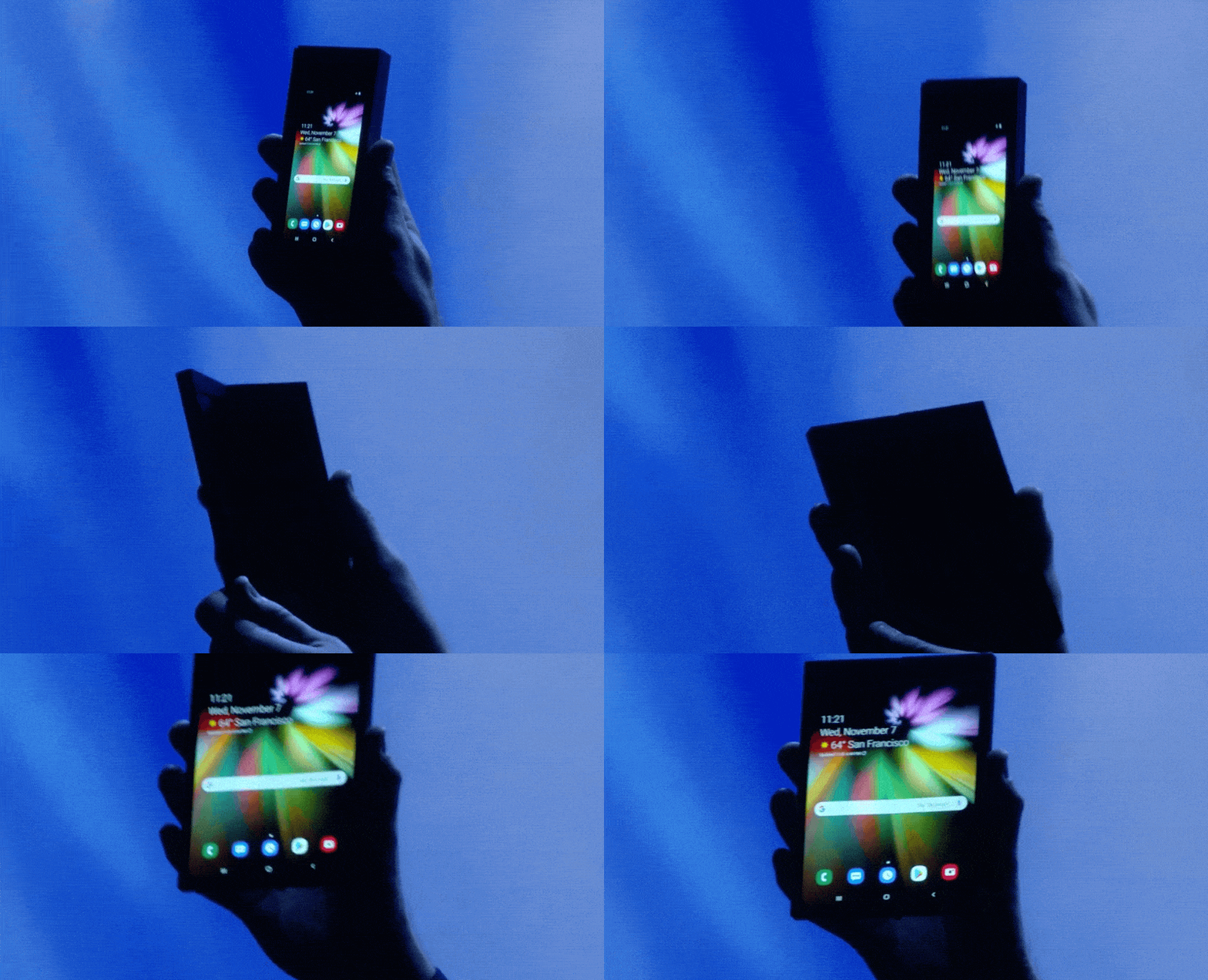
Finding that clip of the prototype folding/unfolding means digging through Samsung’s two-hour developer keynote, so we went ahead and GIF’d it up for you.

Here’s what it looks like going from phone mode to tablet mode:

And from tablet mode back to a more pocket-friendly phone mode:

While this isn’t the first folding phone we’ve seen , it also won’t be the last. With Google officially adding support for folding displays into Android as of this morning, it sounds like they’ve got reason to think a number of manufacturers are dabbling with this concept — enough of them, at least, to make it worthwhile to wire these changes into the main Android codebase.

If you want to see the relevant bit of the Samsung keynote for yourself, it starts juuuust before the 1 hour and 25 minute mark in the stream embedded below:


from blogger-2 https://ift.tt/2SVkmek
via IFTTT

Samsung shares a glimpse of its folding ‘Infinity Flex Display’ smartphone

After hyping its unveil of its long-rumored folding smartphone, Samsung kind of delivered an announcement, revealing a dual-screen folding phone prototype.

“How can we make the screen bigger without actually increasing the size of the device itself?” a Samsung exec posited onstage.

The company showcased a prototype of its “Infinity Flex Display,” a device that can be unfolded. In a pitch black room, a company exec showcased the device, which was housed in a larger case to “obscure the form factor.” There’s a conventional outer display on the front with a fairly low screen-to-body ration, but when you unfold the phone, there’s a massive 7.3″ display on the inside.

It’s a bit surprising that the folding display is on the inside of the phone rather than the outside edge, though I’m sure it’s much easier for the company to build a reliable display if the actual folding part of the screen doesn’t have to account for the entire side of the phone.

When you open the phone, your open apps will move from the front display to the tablet-sized display, functionality only possible thanks to some updates to Android.

It’s clear that despite hyping this “innovation,” Samsung isn’t quite ready to release a device of this type yet. The company says it will start mass production of the new display type in the coming months. The company teased more announcements surrounding the device at the next Samsung Unpacked event in 2019.

Whether this is the future of the phablet or not, it’s certainly an evolution of the smartphone form factor. Samsung believes that the folding display is the “foundation of the smartphone of tomorrow,” but whether there’s more beyond the gimmick certainly wasn’t clarified today.


from blogger-2 https://ift.tt/2RFhYas
via IFTTT

Google is adding Android support for foldable screens

Big day for developer events. As Samsung was on stage getting ready to talk about its upcoming foldable phone, Google spilled the beans a bit at its own Android Developer Summit. The company briefly detailed plans bake support for folding phones into the mobile operating system.

Support for the nascent technology is going to be tough, given what’s expected to be a variety of different form factors, so Google’s been working with hardware partners. It’s first, naturally, is  Samsung. The two companies have been working closely on a device it plans to launch “early next year,” according to Google. That device is expected to debut moments from now on Samsung’s own stage.

Google is referring to the category as “Foldables.”

“You can think of the device as both a phone and a tablet,” Android VP of Engineering Dave Burke explained. “Broadly, there are two variants – two-screen devices and one-screen devices. When folded, it looks like phone, fitting in your pocket or purse. The defining feature for this form factor is something we call screen continuity. ”

Among the addition here is the ability to flag app to respond to the screen as it folds and unfolds — the effect would likely be similar to response of applications as handsets switch between portrait and landscape modes.

While Samsung’s is the most prominent, the company company’s Foldable isn’t expected to be the first to market. That honor will like go to Royole’s FlexPai device, though that handset has already been knocked for build quality ahead of launch. Whatever the case, Samsung’s certainly not going to be alone here, but it will almost certainly be a market leader.


from blogger-2 https://ift.tt/2RFuE0G
via IFTTT

Samsung opens its Bixby assistant to developers

Samsung has been suffering through a lot of catch-up in the voice assistant race, but at its annual developer conference the company placed a major emphasis on how it’s expanding the scale and effectiveness of its Bixby assistant.

The company announced that Bixby would be coming to more devices and more languages with third-party developers finally gaining access to building functionality for the AI assistant.

“For the first time we are opening Bixby to all of you, our developers,” Samsung EVP Eui-Suk Chung announced onstage.

The company is pledging to bring the assistant to watches, refrigerators, tablets, washing machines and more, and in the coming months will be adding support for five additional languages. While these promises seemed to sit a bit further down the line, the company was ready to talk about their Bixby developer kit during the keynote.

The company announced the release of the Bixby Developer Studio, a set of dev tools that’s “way ahead of the other guys,” Viv Labs CEO/ Siri co-founder Dag Kittlaus told the crowd. The company will also be introducing Bixby Marketplace, a home for users to discover the new functionality of their voice assistant.

Bixby may have a long road ahead to catch up with other companies, but third-party integrations are something that none of the major voice assistant platforms have nailed. If Samsung can continue to invest in the platform and court developers with sophisticated tools, they may have bette luck in gaining third-party integrations that feel more ancillary.


from blogger-2 https://ift.tt/2DqHCMR
via IFTTT

Monday, November 5, 2018

Samsung’s social logo teases a folding phone ahead of announcement

All of the major players have held events over the past few months, but hardware season still has a few last gasps left. The Samsung Developer Conference happening this week in San Francisco isn’t likely to be a major launching pad for consumer electronics, but the company is expected to offer a glimpse into what’s to come.

Samsung’s long been a fan of teasing out big news ahead of launch, and all subtly has gone out the window with the folding logo the company’s adopted on social media. A report from Bloomberg later backed up by The Wall Street Journal has the company showing off a prototype of a phone with a foldable display this week.

The company is said to still be debating the specifics of the hardware at this late stage, and the product may only be glimpsed at in the form of an on-screen render or prototype. For Samsung, the key is showing the world that it’s continuing to innovate after a lukewarm critical reception on its last couple of devices.

The company likely won’t be first to market with the screen folding tech. That honor will likely go to the Royole Corporation’s FlexPai handset, which is due out before the end of the year. Though from the looks of it, it won’t leave the best first impression.


from blogger-2 https://ift.tt/2OtqSFM
via IFTTT

Friday, November 2, 2018

Samsung’s Bixby may finally get more third-party integration soon

Poor Bixby. We admittedly haven’t had a lot of nice things to say about Samsung’s smart assistant since launch — but that’s not for lack of potential. The company has promised great things since day one, but has been slow to deliver on, well, just about everything.

Third-party integration was supposed to be one of Bixby’s biggest selling points, but in the year and a half since launch, Samsung hasn’t offered a lot on that front. According to a new report from The Wall Street Journal, the hardware giant will shed more light on its plans at next week’s Samsung Developer Conference, with the launch of third-party “capsules.”

On the face of it, at least, the offerings sound fairly similar to the skills and actions we’ve seen on the competition, letting devs build their own custom responses. It’s something Samsung will really need to push if products like the upcoming Galaxy Home premium smart speaker are going to find any sort of market.

The HomePod competitor already looks like a tough sell as Samsung makes a steep climb further into the burgeoning smart home market, and high-profile partnerships are going to be an important key to breaking in. Speaking of tricky propositions, the Journal story also reconfirms previous rumors Samsung will be showing off a folding phone at next week’s event.


from blogger-2 https://ift.tt/2F0rzHg
via IFTTT